Yes, you can use a freshwater fishing rod in saltwater for occasional, light excursions, but it requires significant precautions and meticulous maintenance. While specialized saltwater rods offer superior corrosion resistance and power for larger marine species, a freshwater rod can be adapted if you understand its limitations and commit to rigorous post-fishing care, especially immediate and thorough rinsing and drying of all components.
Common Fishing Rod Types
Understanding the basic types of fishing rods and their inherent design characteristics helps in assessing their suitability for saltwater environments. While most freshwater rods prioritize sensitivity and lighter tackle, saltwater demands greater durability and corrosion resistance.
Baitcasting Rods
Baitcasting rods are typically designed for precision casting and handling heavier lines and lures, making them popular for bass fishing and other freshwater species. They are often stiffer with guides on top, designed to be used with a baitcasting reel. When considering these for saltwater, their robust backbone can be an advantage for fighting larger fish. However, their components, especially the reel seat and guides, may not be built with corrosion-resistant materials. The intricate mechanics of baitcasting reels are particularly vulnerable to salt intrusion.
Spinning Rods
Spinning rods are perhaps the most versatile and widely used rod type, known for their ease of use and ability to cast lighter lures. They feature guides on the underside and are paired with spinning reels. Many freshwater anglers start with or frequently use spinning setups. For saltwater, a heavier power spinning rod might handle inshore species, but like baitcasting rods, the components are the primary concern. Freshwater spinning reels, in particular, require meticulous cleaning to prevent saltwater damage.
Fly Rods
Fly rods are distinct in their design, used for casting artificial flies with specialized weighted lines. They are characterized by their extreme flexibility and lightweight build, allowing for delicate presentations. While specific saltwater fly rods exist, using a freshwater fly rod in the ocean is generally not recommended unless it’s a very light inshore application for small, non-aggressive species. The delicate guides and reel seats are highly susceptible to corrosion, and the rod’s power is usually insufficient for most saltwater game fish.
Lure Rods
“Lure rod” is a broad category, often overlapping with spinning and baitcasting rods, specifically optimized for casting various artificial lures. These rods vary greatly in power and action depending on the target species and lure weight. A heavier freshwater lure rod might perform adequately for smaller saltwater species if it has a good backbone. The critical factor remains the material composition of its components and the angler’s commitment to post-fishing maintenance.
Surf Rods
|
Our Picks for the Best Fishing Rod in 2026
As an Amazon Associate I earn from qualifying purchases.
|
||
| Num | Product | Action |
|---|---|---|
| 1 | Shakespeare Micro Spinning Rod |

|
| 2 | PLUSINNO Fishing Rod and Reel Combos Carbon Fiber Telescopic Fishing Pole with Reel Combo Sea Saltwater Freshwater Kit Fishing Rod Kit |
|
| 3 | Fishing Rod, 6.9ft 2Pcs Telescopic Fishing Rods Set, Carbon Fiber Fishing Pole, 2PCS Spinning Rod and Reel Combo with Carrier Bag Freshwater Fishing Rod and Reel Combos Kits Fishing Gear |
|
| 4 | PLUSINNO Fishing Gear,Full Fishing kit Include Fishing Rod and Reel Combo, Tackle Box with Fishing Lures, Fishing Accessories, Fishing Pliers,Fishing Gifts for Men with Fishing Tool Kit |
|
| 5 | PLUSINNO Fishing Rod and Reel Combos - Carbon Fiber Telescopic Fishing Pole - Spinning Reel 12 +1 Shielded Bearings Stainless Steel BB |
|
| 6 | Sougayilang Fishing Rod Reel Combo with Telescopic Fishing Pole Spinning Reel Carrier Bag for Travel Saltwater Freshwater Fishing |
|
| 7 | OKUMATrout Rod |
|
| 8 | PLUSINNO Fishing Rod and Reel Combos Carbon Fiber Telescopic Fishing Pole with Reel Combo Sea Saltwater Freshwater Kit Fishing Rod Kit |
|
| 9 | PLUSINNO Fishing Rod and Reel Combos Carbon Fiber Telescopic Fishing Pole with Reel Combo Sea Saltwater Freshwater Kit Fishing Rod Kit |
|
| 10 | PLUSINNO Fishing Rod and Reel Combos - Carbon Fiber Telescopic Fishing Pole - Spinning Reel 12 +1 Shielded Bearings Stainless Steel BB |
|
Surf rods are explicitly designed for casting long distances from the beach or pier into the ocean. They are typically very long (8-15 feet or more), heavy, and robust, built to handle powerful waves, heavy weights, and large saltwater fish. Freshwater rods, by contrast, are generally much shorter and lighter, making them unsuitable for the demands of surf fishing. The length and power of a surf rod are essential for clearing the breaking waves and fighting strong currents and large fish.
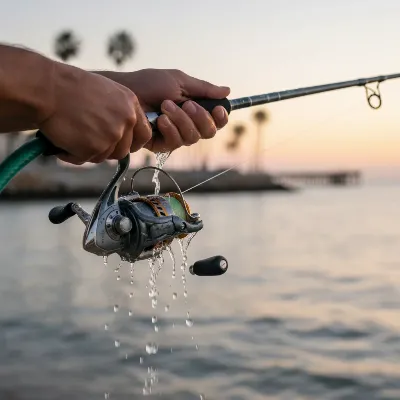 An angler meticulously rinsing a fishing rod with fresh water after a day of saltwater fishing, with a blurry ocean backdrop.
Comparing Fishing Rod Types for Saltwater Use
When considering taking a freshwater rod into saltwater, understanding the fundamental design differences can help manage expectations and mitigate risks. Saltwater environments are inherently more corrosive and often involve larger, stronger fish, demanding specific characteristics from your gear.
| Feature | Freshwater Rods | Saltwater Rods | Adaptation for Saltwater (Freshwater Rods) |
|---|---|---|---|
| Length | Typically shorter (5-8 feet) for precision and maneuverability in smaller spaces. | Often longer (7-15+ feet) for longer casts, fighting larger fish, and clearing waves. | Shorter rods can be used for inshore, close-quarters fishing. Not suitable for surf or offshore. |
| Blank Material | Primarily graphite or fiberglass, optimized for sensitivity and lightweight. | Graphite, fiberglass, or composite blends, prioritizing strength and corrosion resistance. | The blank itself is less prone to corrosion, but heavy use can stress lighter blanks. |
| Guides & Reel Seat Materials | Often aluminum oxide guides with aluminum reel seats; less emphasis on extreme corrosion resistance. | Stainless steel, titanium, or ceramic guides with anodized aluminum or carbon reel seats for superior corrosion resistance. | This is the weakest link. Highly susceptible to rust. Requires immediate and thorough rinsing. |
| Rod Power | Light to Medium-Heavy, designed for smaller to medium-sized fish and finesse. | Medium-Heavy to Heavy, built for larger, powerful saltwater species and heavier lures/lines. | Lighter rods may struggle with larger saltwater fish, risking breakage. Medium-heavy freshwater rods offer a better chance. |
| Rod Action | Varies from Slow to Fast, depending on technique; often faster for sensitivity. | Often Fast to Moderate-Fast for strong hooksets and fighting power. | Action might be less optimal for large, hard-fighting saltwater species. |
| Reel Type Suitability | Designed for freshwater spinning, baitcasting, or fly reels; typically less sealed. | Built for saltwater-specific spinning, baitcasting, conventional, or fly reels; often sealed for protection. | Freshwater reels are highly vulnerable to corrosion; meticulous cleaning is paramount, or use a saltwater reel. |
| Target Fish | Bass, trout, panfish, pike, carp, etc. | Redfish, snook, snapper, tarpon, tuna, marlin, etc. | Can be adapted for smaller inshore species like speckled trout, flounder, or small redfish. |
| Typical Price | Generally lower (e.g., $30-$200) | Generally higher ($100-$1000+) due to specialized materials. | An affordable alternative for occasional use, provided proper care. |
Important Factors When Adapting or Choosing a Rod for Saltwater
Successfully using a freshwater rod in saltwater, or selecting a new rod for marine environments, hinges on understanding several key design elements. These factors dictate a rod’s performance, durability, and resilience against corrosive conditions.
Rod Length
The length of a fishing rod significantly impacts casting distance, accuracy, and leverage when fighting a fish. Shorter rods (under 7 feet) offer greater accuracy and are easier to maneuver, ideal for tight freshwater spots. However, in saltwater, longer rods (7-10 feet for inshore, 10-15+ feet for surf) are often preferred. They allow for longer casts, essential for reaching distant fish or clearing breaking waves from shore. If adapting a freshwater rod, a longer one will offer better versatility for modest saltwater scenarios, though it will still fall short for true surf or offshore demands.
Rod Material
The blank material of a fishing rod plays a critical role in its strength, sensitivity, and weight. For saltwater use, corrosion resistance of the components is more critical than the blank itself, but the blank’s overall durability is still important.
- Fiberglass: Known for its durability and flexibility, fiberglass rods are less sensitive but more forgiving, making them excellent for battling hard-fighting fish. They are also relatively resistant to impact.
- Graphite: Lighter and more sensitive than fiberglass, graphite rods offer better feel for subtle bites and faster action. However, they can be more brittle and less forgiving under extreme stress.
- Composite: Blending fiberglass and graphite, composite rods aim to offer the best of both worlds: good sensitivity with enhanced durability. Many saltwater rods are made from composites for this reason.
While the blank itself is generally resistant to salt, the components attached to it are not.
Rod Power
Rod power, or “weight,” refers to the amount of force required to bend the rod. It dictates the line weight and lure weight the rod can handle, and ultimately, the size of the fish it’s designed to catch.
- Light/Ultra-Light: Best for small freshwater fish and light lines. Highly sensitive.
- Medium-Light/Medium: Versatile for many freshwater species like bass and trout. Can handle moderately sized fish.
- Medium-Heavy/Heavy: Essential for larger freshwater game fish and most saltwater applications. Provides the backbone needed to fight powerful fish and cast heavier lures.
- Extra-Heavy: Reserved for very large saltwater species (e.g., tuna, marlin) and heavy offshore fishing.
When taking a freshwater rod into saltwater, a medium-heavy power is generally the minimum recommended, as lighter rods risk breakage when encountering stronger saltwater species.
Rod Action
Rod action describes where the rod bends along its length when pressure is applied. It affects casting distance, accuracy, and hook-setting ability.
- Slow Action: Bends throughout the entire blank. Provides excellent casting distance for lighter lures and a softer presentation, but less hook-setting power.
- Moderate Action: Bends in the upper half of the blank. Offers a good balance of casting distance and fish-fighting power.
- Fast Action: Bends only in the upper third or quarter of the blank. Highly sensitive for detecting bites and provides strong, quick hook-sets.
For most saltwater fishing, a fast or moderate-fast action rod is preferred because it offers the power needed to drive hooks into tough mouths and control strong fish. A freshwater rod with fast action will be more suitable for saltwater adaptation.
Suitable Reel Types
The reel is arguably the most vulnerable part of any fishing setup when exposed to saltwater. Freshwater reels often lack the sealed bearings and corrosion-resistant components found in saltwater-specific reels. If you must use a freshwater reel, it is paramount to clean and lubricate it meticulously after every saltwater use. Ideally, pair any rod used in saltwater with a reel explicitly designed and rated for saltwater. These reels feature sealed bodies, corrosion-resistant internal components, and durable drag systems that can withstand the harsh environment and the strain of powerful fish.
Rod Handle
The handle material and design contribute to comfort, grip, and control, especially during long fishing sessions or when battling a strong fish. Common materials include cork, EVA foam, and rubberized grips. For saltwater, a comfortable and durable grip that remains secure even when wet is crucial. EVA foam or rubberized grips are often favored for their durability and slip resistance in marine conditions.
Rod Guides
Fishing rod guides are critical for line flow, casting performance, and overall rod durability. This is where freshwater and saltwater rods differ most significantly regarding corrosion.
- Freshwater Guides: Often feature aluminum oxide inserts with chrome or stainless steel frames. These materials are perfectly adequate for non-corrosive freshwater but will quickly rust and degrade when exposed to salt, leading to rough spots that fray line and can even fail.
- Saltwater Guides: Utilize high-quality, corrosion-resistant materials such as stainless steel (with specific coatings), titanium, or ceramic (like SiC or Alconite) inserts. These are designed to withstand constant exposure to salt spray and saltwater without corroding, ensuring smooth line movement and long-term performance. If using a freshwater rod in saltwater, its guides will be the first point of failure without immediate, thorough cleaning.
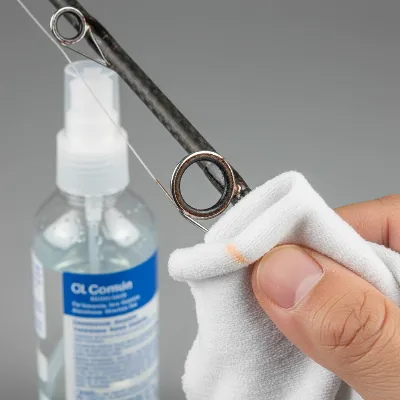 Close-up of a freshwater fishing rod's guides showing signs of rust after saltwater exposure, with a cleaning cloth and freshwater spray bottle in the background.
Essential Care for Freshwater Rods in Saltwater
Using a freshwater fishing rod in saltwater is possible, but it hinges entirely on rigorous, consistent maintenance. Without proper care, saltwater will quickly corrode and damage your gear, rendering it unusable.
Immediate Rinsing and Drying
The single most important step is to thoroughly rinse your rod and reel with fresh water immediately after every exposure to saltwater. This applies even if you only experienced some salt spray.
- Rinse Gently: Use a garden hose with a gentle stream or a bucket of fresh water. Avoid high-pressure sprays, especially on reels, as this can force water into delicate internal mechanisms.
- Focus on Components: Pay special attention to the rod guides, reel seat, and any metal parts on the reel. These are the most susceptible to corrosion.
- Use Mild Soap (Optional but Recommended): For a deeper clean, especially if visible salt crystals are present, a mild soap like dish detergent can be used with a soft cloth or sponge to wipe down the rod. Ensure to rinse thoroughly afterward to remove all soap residue.
- Dry Completely: After rinsing, wipe the entire rod and reel down with a clean, dry cloth. Do not allow water to air dry, as this can leave behind salt deposits. Ensure all crevices and guide frames are dry. Some anglers even suggest using a leaf blower for quick, thorough drying, particularly for reels.
> “The salt in the air and water attacks metal parts, causing them to corrode over time. This leads to cracks, poor performance, and even breakage. To avoid this, saltwater fishing rods use high-quality materials.” – Topline Fishing Tackle, Fishing Tackle Expert
Component Inspection
Regularly inspect your freshwater rod for any signs of corrosion, especially after saltwater use.
- Guides: Check the metal frames of the guides for rust or discoloration. Also, inspect the ceramic inserts for cracks or nicks, which can fray your line.
- Reel Seat: Examine the threads and hood of the reel seat for corrosion. A seized reel seat can make it impossible to remove your reel.
- Handle: Look for any signs of degradation in the handle material, as salt can sometimes affect cork or foam over time.
Addressing minor corrosion early can prevent further damage and costly repairs.
Lubrication and Storage
Proper lubrication and storage further protect your rod and extend its lifespan.
- Lubricate: Apply a light coat of reel-safe oil or corrosion inhibitor to metal parts, particularly on the reel seat threads and guide feet, after cleaning and drying.
- Store Properly: Store your rod in a cool, dry place, away from direct sunlight. Direct sunlight can degrade rod materials over time. Using a rod sock or case can protect it from dust and accidental damage during storage. Ensure the rod and reel are completely dry before storing to prevent moisture from trapping salt and accelerating corrosion. Back off the drag on your reel before storing to prolong the life of the drag washers.
Conclusion
The question of whether you can use a freshwater fishing rod in saltwater doesn’t have a simple “yes” or “no” answer; it’s more accurately “yes, with significant precautions.” While specialized saltwater rods offer superior corrosion resistance and the power needed for larger marine species, your freshwater gear can serve for occasional, light saltwater excursions. The absolute key to success and longevity lies in meticulous post-fishing care, particularly immediate and thorough rinsing and drying of all components. Understanding the limitations of your freshwater rod’s materials and adapting your expectations to target smaller, inshore species will also contribute to a positive experience. With diligent maintenance, you can extend the life of your gear and enjoy the thrill of saltwater fishing without immediately investing in a new setup. So, are you ready to give your freshwater rod a taste of the ocean, armed with the knowledge to keep it in prime condition?
Frequently Asked Questions
What are the main risks of using a freshwater rod in saltwater?
The primary risks involve rapid corrosion of metal components like rod guides and reel seats due to salt exposure, and the potential for lighter freshwater rods to lack the power and durability needed to handle larger, more aggressive saltwater fish, possibly leading to rod breakage.
How soon after saltwater exposure should I clean my fishing rod?
You should rinse and thoroughly dry your freshwater fishing rod and reel with fresh water immediately after every saltwater outing, even if it’s just a few splashes. Delaying cleaning allows salt to crystalize and accelerate corrosion, significantly shortening your gear’s lifespan.
Frequently Asked Questions
Can a freshwater fishing rod be used in saltwater?
Yes, a freshwater fishing rod can be used in saltwater for occasional, light fishing trips, but it requires immediate and thorough cleaning after each use. Without proper maintenance, components like guides and reel seats will quickly corrode due to salt exposure.
What are the main risks of using a freshwater rod in saltwater?
The primary risks involve rapid corrosion of metal components like rod guides and reel seats due to salt exposure, and the potential for lighter freshwater rods to lack the power and durability needed to handle larger, more aggressive saltwater fish, possibly leading to rod breakage.
How soon after saltwater exposure should I clean my fishing rod?
You should rinse and thoroughly dry your freshwater fishing rod and reel with fresh water immediately after every saltwater outing, even if it's just a few splashes. Delaying cleaning allows salt to crystalize and accelerate corrosion, significantly shortening your gear's lifespan.
What rod power is recommended for saltwater adaptation?
When adapting a freshwater rod for saltwater use, a medium-heavy power is generally the minimum recommended. Lighter rods risk breakage when encountering stronger saltwater species, while medium-heavy rods offer the backbone needed for larger fish.
What are the most vulnerable parts of a freshwater rod in saltwater?
The most vulnerable parts of a freshwater rod when exposed to saltwater are the metal components, specifically the rod guides and the reel seat. These parts are typically made from materials less resistant to corrosion than those found on dedicated saltwater rods.
Should I use a freshwater reel with a freshwater rod in saltwater?
It is not recommended to use a freshwater reel in saltwater due to its lack of sealed bearings and corrosion-resistant components. If you must, meticulous cleaning and lubrication after every saltwater use are paramount, but ideally, pair any rod used in saltwater with a saltwater-specific reel.
How to Care for a Freshwater Rod in Saltwater
Properly caring for your freshwater fishing rod after saltwater exposure is crucial to prevent corrosion and extend its lifespan. Follow these steps for effective maintenance.
Immediately after every saltwater exposure, rinse your rod and reel thoroughly with fresh water. Use a gentle stream from a garden hose or a bucket, avoiding high-pressure sprays that can force water into delicate reel mechanisms.
Pay special attention to the rod guides, reel seat, and any metal parts on the reel, as these are most susceptible to corrosion. For a deeper clean, use a mild soap with a soft cloth, then rinse all soap residue completely.
After rinsing, wipe the entire rod and reel down with a clean, dry cloth. Do not allow water to air dry, as this can leave behind salt deposits. Ensure all crevices and guide frames are completely dry before storage.
Regularly inspect guides and reel seats for rust or discoloration, addressing minor corrosion early. Apply a light coat of reel-safe oil or corrosion inhibitor to metal parts, especially reel seat threads and guide feet, after cleaning and drying.
Store your rod in a cool, dry place away from direct sunlight, using a rod sock or case for protection. Ensure the rod and reel are completely dry before storing to prevent moisture from trapping salt and accelerating corrosion. Back off the drag on your reel before storing.

I appreciate the detailed breakdown on using freshwater rods in saltwater. I’ve always been hesitant, but the tips on corrosion resistance and what to look out for are super helpful. I used my lighter freshwater setup for some smaller species in the brackish water, and as long as I followed the cleaning steps, it performed perfectly. No issues at all.
I tried using my freshwater rod in saltwater after reading some tips online, and while it worked, I did notice some minor corrosion on one of the guides pretty quickly. I thought I rinsed it well, but maybe not well enough. It’s definitely doable for occasional use, but I think I’ll invest in a dedicated saltwater rod soon for peace of mind. The sensitivity was good though.
I’ve always wondered about using my freshwater baitcasting rod for a quick trip to the coast, and this really cleared things up. The advice on immediate and thorough rinsing is spot on. I took my favorite baitcaster out last weekend for some redfish, and after a good rinse and dry, it still feels great. Definitely need to be diligent with the maintenance.
This is exactly what I needed to hear! I’ve got a few freshwater rods that I love, and sometimes I just want to hit the bay without buying new gear. The emphasis on understanding limitations and rigorous post-fishing care is key. I’ve been extra careful with my gear after saltwater exposure, and it’s held up surprisingly well. Great practical advice.