To extend the life and performance of a new fishing rod, anglers must implement consistent maintenance, including immediate post-trip cleaning, thorough inspection for damage, and proper storage. Neglecting these steps can lead to corrosion, material degradation, and premature failure, significantly shortening the rod’s lifespan and impacting fishing success. Regular care ensures the rod remains a precision tool, performing flawlessly for years.
Why Fishing Rod Maintenance Matters
Regular maintenance isn’t just about keeping your gear looking good; it’s fundamental to its functionality and longevity. Over time, elements like saltwater, dirt, grime, and even UV rays can wreak havoc on your rod’s blank, guides, reel seat, and handle. Salt is particularly corrosive, capable of degrading metal components and compromising the integrity of your rod. Dirt and grit can abrade your line, cause friction in guides, and lead to premature wear. By establishing a consistent maintenance routine, you protect your investment, ensure smooth operation, and prevent small issues from escalating into major problems that could ruin your fishing experience.
Immediate Care After Every Fishing Trip
The most crucial step in fishing rod maintenance begins as soon as your fishing trip ends. Post-trip care is paramount, especially after excursions in saltwater, which is notorious for its corrosive properties.
Cleaning the Blank and Guides
Immediately after use, particularly in saltwater environments, your rod needs a thorough cleaning. Begin by rinsing the entire rod with fresh, cool water to remove any salt, sand, or debris. For a deeper clean, use a mild soap or dish detergent mixed with warm water. Gently wipe down the rod blank with a soft cloth or sponge, paying close attention to any areas with visible grime.
The guides are critical components and often accumulate the most build-up. Use an old toothbrush or a cotton swab dipped in soapy water to meticulously clean the inside and outside of each guide. This removes any abrasive particles that could damage your fishing line during casting and retrieving. Rinse the rod again thoroughly with fresh water, ensuring all soap residue is gone. Finally, dry the rod completely with a clean, soft towel. Allowing it to air dry can be sufficient, but wiping it down ensures no water spots or moisture are left behind, especially in crevices around guides and the reel seat.
Inspecting Your Rod for Damage
While cleaning, take the opportunity to perform a meticulous inspection of your rod. Look for any visible signs of wear and tear, such as nicks, scratches, or cracks on the rod blank. Even minor damage can compromise the rod’s strength and lead to breakage under stress. Check all guides for bends, cracks in the ceramic inserts, or any looseness in their wraps. Damaged guide inserts can fray or cut your line, costing you a prized catch. Ensure the reel seat is secure and free of corrosion or grit that could impede the proper seating of your reel. Also, inspect the ferrule connections (on multi-piece rods) for any signs of wear or excessive play. Early detection of damage allows for timely repairs, preventing further complications.
Proper Storage for Long-Term Protection
How you store your fishing rod when not in use is just as important as post-trip cleaning. Improper storage can lead to warping, weakening of materials, and environmental damage.
Choosing the Right Environment
|
Our Picks for the Best Fishing Rod in 2026
As an Amazon Associate I earn from qualifying purchases.
|
||
| Num | Product | Action |
|---|---|---|
| 1 | Sougayilang Fishing Rod Reel Combo with Telescopic Fishing Pole Spinning Reel Carrier Bag for Travel Saltwater Freshwater Fishing |

|
| 2 | PLUSINNO Fishing Rod and Reel Combos Carbon Fiber Telescopic Fishing Pole with Reel Combo Sea Saltwater Freshwater Kit Fishing Rod Kit |
|
| 3 | PLUSINNO Fishing Gear,Full Fishing kit Include Fishing Rod and Reel Combo, Tackle Box with Fishing Lures, Fishing Accessories, Fishing Pliers,Fishing Gifts for Men with Fishing Tool Kit |
|
| 4 | PLUSINNO Fishing Rod and Reel Combos Carbon Fiber Telescopic Fishing Pole with Reel Combo Sea Saltwater Freshwater Kit Fishing Rod Kit |
|
| 5 | OKUMATrout Rod |
|
| 6 | Fishing Rod, 6.9ft 2Pcs Telescopic Fishing Rods Set, Carbon Fiber Fishing Pole, 2PCS Spinning Rod and Reel Combo with Carrier Bag Freshwater Fishing Rod and Reel Combos Kits Fishing Gear |
|
| 7 | PLUSINNO Fishing Rod and Reel Combos Carbon Fiber Telescopic Fishing Pole with Reel Combo Sea Saltwater Freshwater Kit Fishing Rod Kit |
|
| 8 | Shakespeare Micro Spinning Rod |
|
| 9 | PLUSINNO Fishing Rod and Reel Combos - Carbon Fiber Telescopic Fishing Pole - Spinning Reel 12 +1 Shielded Bearings Stainless Steel BB |
|
| 10 | PLUSINNO Fishing Rod and Reel Combos - Carbon Fiber Telescopic Fishing Pole - Spinning Reel 12 +1 Shielded Bearings Stainless Steel BB |
|
Always store your fishing rod in a cool, dry place, away from direct sunlight, extreme temperatures, and high humidity. Direct sunlight and excessive heat can degrade the rod’s materials (like graphite, fiberglass, and resins), causing them to become brittle over time. High humidity can encourage mold growth on cork handles and corrosion on metal components. A climate-controlled closet, a dedicated storage room, or a garage with stable conditions are ideal. Avoid leaning your rod against walls or in corners, as prolonged pressure can lead to warping of the blank.
Using Protective Gear
Invest in quality protective gear for your rods. Rod tubes offer the best protection during long-term storage and transportation, shielding the rod from impacts and scratches. For shorter-term storage or when storing multiple rods together, rod sleeves made of breathable fabric can prevent surface scratches and tangling. Vertical rod racks are excellent for keeping rods organized, off the ground, and preventing warping by distributing weight evenly. Ensure rods are stored with the tips facing up or horizontally in appropriate holders.
Disassembling Multi-Piece Rods
For multi-piece rods, it’s generally recommended to disassemble them after each trip and before long-term storage. This relieves pressure on the ferrules, preventing them from seizing up due to temperature changes or accumulated grime. Cleaning each section individually also ensures a more thorough removal of salt and dirt. When reassembling, ensure the ferrules are clean and then apply a very light coat of ferrule wax or silicone lubricant to ease assembly and disassembly.
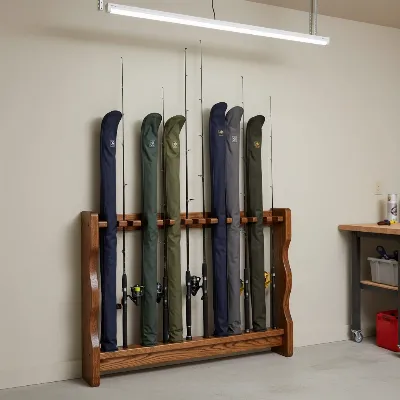 Fishing rods stored vertically on a rack in a garage, showcasing proper storage practices
Safe Handling and Transportation
Many common rod damages occur not during fishing, but during transport and casual handling. Taking simple precautions can significantly extend your rod’s life.
Transporting with Care
When transporting your fishing rod, especially in a vehicle, always use a protective rod tube or a secure rod carrier system. Avoid tossing your rod into the back of a truck or car trunk where it can be crushed by other gear or shift unexpectedly. If using a rod sleeve, ensure it’s securely placed where it won’t be jostled or have doors closed on it. Never leave your rod exposed to direct sunlight for extended periods inside a hot vehicle, as this can weaken the blank.
On-the-Water Best Practices
Beyond proper transport, mindful handling on the water is essential. Never force your line loose by bending the rod at extreme angles; instead, pull the line directly with your hands. Rods are designed to distribute stress along their entire length, and sharp, localized bends can cause immediate breakage. Similarly, avoid lifting heavy fish directly out of the water using only the rod; always use a net to land your catch. Be cautious of your surroundings – never lean your rod against a boat railing, car door, or on the ground where it can be stepped on, knocked over, or slammed by a closing door.
Specific Component Care
While the overall rod blank needs attention, some components require specific care to function optimally and prevent premature failure.
Guides and Reel Seats: Preventing Corrosion and Build-Up
As mentioned, guides are crucial and vulnerable. Beyond cleaning, regularly inspect guide inserts for cracks or grooves that could damage your line. If a ceramic insert is chipped, it must be replaced immediately. The metal frames of guides, especially in saltwater, are prone to corrosion. After cleaning, you can apply a very thin coat of silicone spray or a specialized reel and rod lubricant to the metal parts of the guides and the reel seat to create a protective barrier. Ensure the reel seat threads are clean and free of grit to allow for smooth reel attachment and removal.
Handles: Keeping Cork and Foam in Top Condition
Cork and EVA foam handles provide grip and comfort, but they also absorb oils, dirt, and fish slime. After each use, wipe down your handles with a damp cloth and mild soap to remove residue. For cork handles, a paste made of baking soda and water can gently clean and brighten them, followed by a thorough rinse and complete drying. Ensuring handles are fully dry before storage prevents mold and mildew growth, which can degrade the material and create unpleasant odors.
Ferrules and Joints: Preventing Sticking and Damage
For multi-piece rods, the ferrules (the joints where sections connect) require special attention. Keep them clean and free of dirt. If a joint becomes stuck due to expansion from heat or accumulated grime, avoid twisting or forcing it apart, as this can damage the blank. A common trick is to apply a cold pack (like a bag of frozen peas) to the male ferrule for a few minutes. The cooling causes the material to contract slightly, often allowing for easier separation. Applying a small amount of ferrule wax can prevent future sticking.
Tools and Products for Rod Maintenance
A few basic tools and products will make your maintenance routine more effective:
- Mild Dish Soap: For general cleaning of the blank and handle.
- Soft Cloths/Sponges: To wipe down surfaces without scratching.
- Old Toothbrush/Cotton Swabs: Essential for cleaning around guides and in tight spots.
- Fresh Water Source: For rinsing after every trip.
- Rod Tubes/Sleeves/Racks: For secure storage and transport.
- Silicone Spray or Light Oil: For protecting metal components like guide frames and reel seats.
- Ferrule Wax: To prevent multi-piece rod sections from sticking.
When to Seek Professional Help
While many maintenance tasks can be handled at home, some issues are best left to professionals. If you notice significant cracks or deep nicks in your rod blank, major damage to a guide’s frame that you can’t replace, or persistent issues with the reel seat, it’s wise to consult a reputable rod repair shop. Attempting complex repairs without the proper tools or expertise can worsen the damage and potentially compromise the rod’s structural integrity. A professional can assess the damage, recommend the best course of action, and ensure your rod is safely restored to optimal condition.
Conclusion
Your new fishing rod is a valuable asset, and dedicating a little time to its maintenance will significantly enhance your angling experience. By consistently cleaning your rod after every use, meticulously inspecting for any signs of wear, storing it correctly, and handling it with care, you’re not just preserving its appearance; you’re safeguarding its performance and extending its working life. A well-maintained rod casts smoother, feels better in hand, and is more reliable when that trophy fish strikes. Don’t let neglect shorten your rod’s potential; embrace these essential maintenance tips and enjoy countless more successful and satisfying fishing trips. What’s the most surprising maintenance tip you’ve learned that has saved your favorite rod?
Frequently Asked Questions
How often should I clean my fishing rod?
It is highly recommended to clean your fishing rod after every fishing trip, especially if you’ve been fishing in saltwater. A quick rinse with fresh water and a wipe-down is usually sufficient, with a more thorough cleaning involving mild soap every few trips or as needed.
Can I use household cleaners on my fishing rod?
You should generally stick to mild soap or dish detergent mixed with warm water for cleaning your fishing rod. Avoid harsh chemical cleaners, abrasive solvents, or strong degreasers, as these can damage the rod’s finish, blank material, or protective coatings.
What’s the best way to store a multi-piece rod?
For optimal long-term storage, disassemble multi-piece rods to relieve pressure on the ferrules. Clean and dry each section, and then store them in a protective rod tube or sleeve in a cool, dry place away from direct sunlight.
How do I fix a stuck rod ferrule?
If a multi-piece rod joint is stuck, avoid forcing it. A common method is to apply a cold pack (like frozen vegetables wrapped in a towel) to the male ferrule for about five minutes. The cold causes the material to contract, often allowing the sections to separate more easily.
Are rod sleeves really necessary?
Rod sleeves are highly recommended. They protect your rod from scratches, dings, and tangles when stored with other rods or during short-distance transport. For more robust protection, especially during travel, a rigid rod tube is essential.
Frequently Asked Questions
How frequently should I clean my fishing rod?
You should clean your fishing rod after every fishing trip, particularly after saltwater use. A quick rinse with fresh water is often enough, with a more thorough cleaning using mild soap recommended every few trips or when visibly dirty.
Are household cleaners safe to use on fishing rods?
No, avoid harsh household chemical cleaners, abrasive solvents, or strong degreasers on your fishing rod. These can damage the rod's finish, blank material, or protective coatings. Stick to mild dish soap mixed with warm water for safe cleaning.
What is the best storage method for a multi-piece fishing rod?
For long-term storage, it's best to disassemble multi-piece rods to relieve pressure on the ferrules. Clean and dry each section individually, then store them in a protective rod tube or sleeve in a cool, dry place away from direct sunlight and humidity.
How can I separate a stuck ferrule on my multi-piece rod?
If a multi-piece rod joint is stuck, do not force it. A common and safe method is to apply a cold pack, such as a bag of frozen vegetables wrapped in a towel, to the male ferrule for about five minutes. The cold causes the material to contract, often allowing the sections to separate easily.
Why are rod sleeves considered necessary for fishing rods?
Rod sleeves are highly recommended because they protect your rod from scratches, dings, and tangles, especially when stored with other rods or during short-distance transport. For more robust protection during travel, a rigid rod tube is essential to prevent significant damage.
Maintain Your Fishing Rod for Extended Life
Follow these steps to properly clean, inspect, and store your fishing rod, ensuring its longevity and optimal performance.
Rinse your rod with fresh, cool water immediately after use, especially in saltwater. For a deeper clean, use mild soap and a soft cloth, paying close attention to guides with an old toothbrush. Rinse thoroughly and dry completely with a soft towel.
While cleaning, meticulously check the rod blank for nicks, scratches, or cracks. Examine all guides for bends, cracked ceramic inserts, or loose wraps. Ensure the reel seat is secure and free of corrosion, and inspect ferrule connections on multi-piece rods for wear.
Store your fishing rod in a cool, dry place away from direct sunlight, extreme temperatures, and high humidity. Use protective gear like rod tubes or sleeves for long-term storage and vertical rod racks to prevent warping. Disassemble multi-piece rods before storage.
Always use a protective rod tube or secure carrier system when transporting your rod in a vehicle. On the water, avoid forcing lines loose by bending the rod at extreme angles and use a net to land heavy fish. Never lean your rod where it can be damaged.
Regularly inspect guide inserts for damage and apply a thin coat of silicone spray to metal parts to prevent corrosion. Clean cork and foam handles with mild soap or a baking soda paste, ensuring they are fully dry before storage. Keep ferrules clean and use ferrule wax to prevent sticking.

This is exactly what I needed! My last rod failed prematurely because I neglected the reel seat, and it corroded badly. The emphasis on checking all components, not just the blank, is super important. I’m definitely going to be more diligent with my new setup. Thanks for the detailed breakdown.
Good tips here, especially the part about inspecting for damage. I recently caught a small chip on my rod blank that I would’ve missed otherwise. Caught it early and got it fixed before it became a bigger issue. The section on proper storage was also a good reminder; my garage can get pretty humid.
I’ve been fishing for decades and thought I knew it all, but the tip about immediate post-trip cleaning really hit home. I used to just rinse my rods, but taking the time to properly clean them right after a saltwater trip has made a huge difference. My older rods are definitely showing less corrosion on the guides now. Great advice that actually works!
The advice on UV rays and material degradation was interesting, but I wish there was more detail on specific products to use for UV protection. It’s a bit vague just saying ‘protect from UV.’ My rod handles still seem to fade pretty quickly even with careful storage. Otherwise, solid general maintenance info.