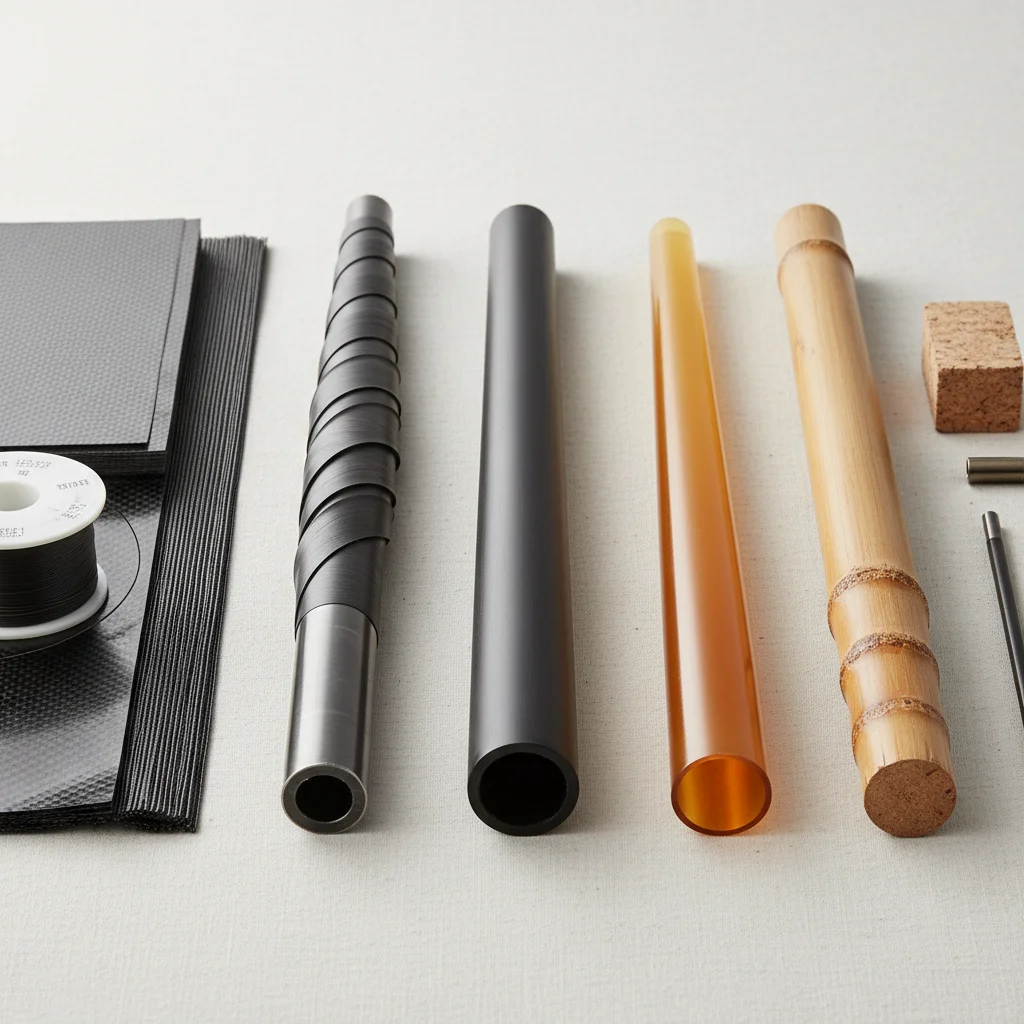
Fishing rod blanks are typically made through a process called mandrell wrapping, involving several key steps to create the core structure of a fishing rod. This method ensures the blank possesses the desired taper, power, and action necessary for various fishing applications. Understanding this manufacturing process sheds light on the performance characteristics of different rods.
The Mandrel and Material Preparation
The journey of a fishing rod blank begins with a precisely tapered steel rod called a mandrel. This mandrel dictates the internal diameter and taper of the finished blank. Concurrently, the raw materials—most commonly carbon fiber (graphite), fiberglass, or a composite blend—are prepared. These materials arrive as sheets or pre-impregnated fabrics, often cut into specific patterns designed to achieve the desired rod characteristics. The quality and type of resin used to bind these fibers are also critical, influencing the blank’s strength, sensitivity, and weight.
The Wrapping Process
Once the mandrel and materials are ready, the pre-cut sheets of fiber are meticulously wrapped around the mandrel. This is a highly skilled process, often done by specialized machinery, to ensure consistent tension and overlap. Multiple layers may be applied, with the orientation of the fibers carefully controlled to enhance specific properties like hoop strength or longitudinal stiffness. For instance, some layers might run parallel to the mandrel for backbone, while others are angled to resist twisting. This stage is crucial for defining the rod’s action and power.
- Fiber selection (carbon fiber, fiberglass, composites)
- Mandrel tapering for desired blank shape
- Precise wrapping tension and overlap
- Strategic fiber orientation for performance
- Resin application and curing
Curing and Finishing
|
Our Picks for the Best Fishing Rod in 2026
As an Amazon Associate I earn from qualifying purchases.
|
||
| Num | Product | Action |
|---|---|---|
| 1 | PLUSINNO Fishing Rod and Reel Combos Carbon Fiber Telescopic Fishing Pole with Reel Combo Sea Saltwater Freshwater Kit Fishing Rod Kit |

|
| 2 | PLUSINNO Fishing Rod and Reel Combos Carbon Fiber Telescopic Fishing Pole with Reel Combo Sea Saltwater Freshwater Kit Fishing Rod Kit |
|
| 3 | Fishing Rod, 6.9ft 2Pcs Telescopic Fishing Rods Set, Carbon Fiber Fishing Pole, 2PCS Spinning Rod and Reel Combo with Carrier Bag Freshwater Fishing Rod and Reel Combos Kits Fishing Gear |
|
| 4 | Shakespeare Micro Spinning Rod |
|
| 5 | PLUSINNO Fishing Rod and Reel Combos - Carbon Fiber Telescopic Fishing Pole - Spinning Reel 12 +1 Shielded Bearings Stainless Steel BB |
|
| 6 | Sougayilang Fishing Rod Reel Combo with Telescopic Fishing Pole Spinning Reel Carrier Bag for Travel Saltwater Freshwater Fishing |
|
| 7 | PLUSINNO Fishing Gear,Full Fishing kit Include Fishing Rod and Reel Combo, Tackle Box with Fishing Lures, Fishing Accessories, Fishing Pliers,Fishing Gifts for Men with Fishing Tool Kit |
|
| 8 | PLUSINNO Fishing Rod and Reel Combos Carbon Fiber Telescopic Fishing Pole with Reel Combo Sea Saltwater Freshwater Kit Fishing Rod Kit |
|
| 9 | PLUSINNO Fishing Rod and Reel Combos - Carbon Fiber Telescopic Fishing Pole - Spinning Reel 12 +1 Shielded Bearings Stainless Steel BB |
|
| 10 | OKUMATrout Rod |
|
After wrapping, the entire assembly—mandrel, fibers, and resin—is placed into an oven for a curing process. Heat activates the resin, causing it to harden and permanently bind the fibers together, forming a solid, cohesive blank. The temperature and duration of curing are carefully controlled to optimize the resin’s properties. Once cured, the blank is cooled, and the mandrel is carefully extracted, leaving behind the hollow fishing rod blank. The blank then undergoes a sanding process to smooth out any imperfections and prepare it for further finishing, such as painting, clear coating, and the addition of guides and handles.
Quality Control and Performance
Throughout the manufacturing process, rigorous quality control checks are performed. These checks ensure that each blank meets specific standards for straightness, wall thickness, weight, and overall structural integrity. Advanced testing methods, including deflection tests and stress analyses, are used to verify the blank’s intended power and action. A well-made blank is the foundation of a high-performing fishing rod, offering the angler the sensitivity to detect subtle bites and the strength to land large fish. The choice of materials and the precision of the manufacturing directly impact the rod’s ability to cast accurately and fight fish effectively.The meticulous attention to detail at every stage ensures that the final product can withstand the rigors of various fishing environments and techniques.
Innovations in Blank Manufacturing
The fishing rod industry continually innovates in blank manufacturing. Advances in material science have led to the development of lighter, stronger, and more sensitive blanks. For example, the integration of nanotechnology into carbon fiber resins can significantly improve a blank’s impact resistance and overall durability without adding substantial weight. Furthermore, multi-modulus graphite blanks, which combine different types of carbon fiber with varying stiffness, allow manufacturers to fine-tune specific sections of the rod for optimal performance, creating blanks that are both powerful in the butt section and incredibly sensitive in the tip. These ongoing developments aim to provide anglers with rods that offer superior casting distance, accuracy, and fish-fighting capabilities.

This was super informative! I’ve always just bought rods without thinking much about the ‘how’ behind them. The part about carbon fiber and fiberglass materials was particularly interesting. I’ve definitely noticed a difference in sensitivity between my graphite and fiberglass rods, and now I understand why.
I always wondered how they got the perfect taper on my favorite bass rod. Learning about the mandrel wrapping process really cleared that up. It’s fascinating to see the engineering behind something I use almost every weekend. Makes me appreciate the craftsmanship even more when I’m out on the lake.
Good info on how blanks are made, especially the resin part. I was hoping for a bit more detail on how different resins affect the rod’s action, like if one type makes it stiffer or more flexible. Still, it’s a solid overview of the manufacturing process.
As someone who’s tried building a rod from a blank before, this was a great read. Understanding the initial steps, especially the material preparation and how those sheets are cut, gives me a better perspective on why some blanks are so much more expensive. Quality really starts at the very beginning.