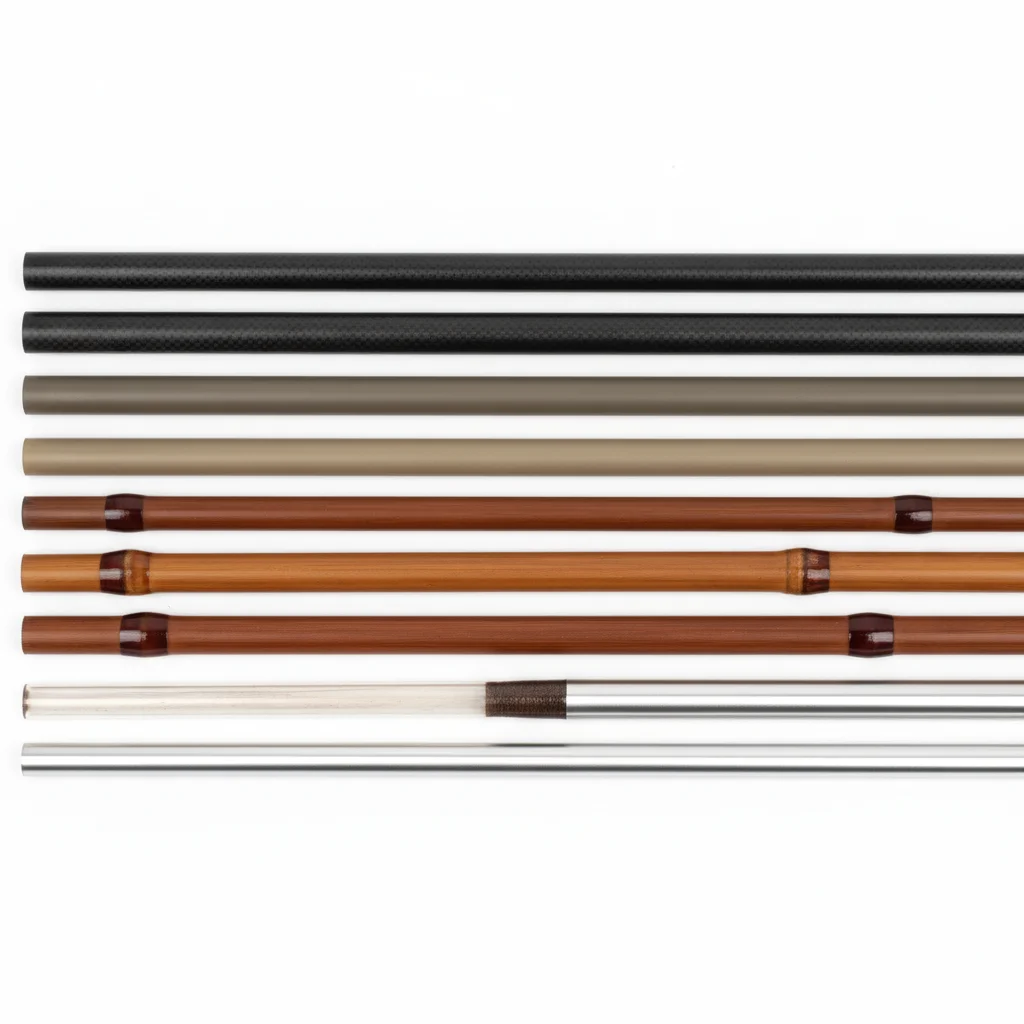
Fishing rod blanks are the core of any fishing rod, and their material significantly impacts the rod’s performance, durability, and feel. There are primarily three main types of materials used for fishing rod blanks: graphite, fiberglass, and composite. Each offers distinct advantages and disadvantages, making them suitable for different fishing styles and preferences.
Graphite Rod Blanks: Lightweight Sensitivity
Graphite is a popular material for fishing rod blanks due to its exceptional sensitivity and lightweight properties. These rods are excellent for detecting subtle bites and offer a crisp, fast action. Graphite blanks are typically categorized by their modulus, which indicates the stiffness-to-weight ratio. Higher modulus graphite means a stiffer, lighter blank, but also one that can be more brittle. Anglers often choose graphite for techniques requiring high sensitivity, such as finesse fishing or jigging.
While highly sensitive, graphite rods can be more prone to breaking under extreme stress or impact compared to fiberglass. This makes careful handling and storage crucial for maintaining their integrity. The manufacturing process for graphite blanks involves layering sheets of graphite material, often with different fiber orientations, to achieve specific actions and powers.
Fiberglass Rod Blanks: Durability and Forgiveness
Fiberglass rod blanks are known for their durability, flexibility, and affordability. They are less sensitive than graphite but offer a more parabolic bend, making them very forgiving when fighting larger fish. Fiberglass rods are often preferred for applications where brute strength and shock absorption are more important than pinpoint sensitivity, such as trolling, live bait fishing, or targeting species that make powerful runs.
Modern fiberglass blanks have improved significantly, offering better sensitivity than older models while retaining their characteristic toughness. They are generally heavier than graphite rods, which can be a consideration for all-day casting. Fiberglass is an excellent choice for beginners or those who prioritize a robust, low-maintenance rod.
Composite Rod Blanks: The Best of Both Worlds
|
Our Picks for the Best Fishing Rod in 2026
As an Amazon Associate I earn from qualifying purchases.
|
||
| Num | Product | Action |
|---|---|---|
| 1 | PLUSINNO Fishing Rod and Reel Combos - Carbon Fiber Telescopic Fishing Pole - Spinning Reel 12 +1 Shielded Bearings Stainless Steel BB |

|
| 2 | PLUSINNO Fishing Gear,Full Fishing kit Include Fishing Rod and Reel Combo, Tackle Box with Fishing Lures, Fishing Accessories, Fishing Pliers,Fishing Gifts for Men with Fishing Tool Kit |
|
| 3 | Fishing Rod, 6.9ft 2Pcs Telescopic Fishing Rods Set, Carbon Fiber Fishing Pole, 2PCS Spinning Rod and Reel Combo with Carrier Bag Freshwater Fishing Rod and Reel Combos Kits Fishing Gear |
|
| 4 | Sougayilang Fishing Rod Reel Combo with Telescopic Fishing Pole Spinning Reel Carrier Bag for Travel Saltwater Freshwater Fishing |
|
| 5 | PLUSINNO Fishing Rod and Reel Combos Carbon Fiber Telescopic Fishing Pole with Reel Combo Sea Saltwater Freshwater Kit Fishing Rod Kit |
|
| 6 | PLUSINNO Fishing Rod and Reel Combos Carbon Fiber Telescopic Fishing Pole with Reel Combo Sea Saltwater Freshwater Kit Fishing Rod Kit |
|
| 7 | Shakespeare Micro Spinning Rod |
|
| 8 | PLUSINNO Fishing Rod and Reel Combos - Carbon Fiber Telescopic Fishing Pole - Spinning Reel 12 +1 Shielded Bearings Stainless Steel BB |
|
| 9 | OKUMATrout Rod |
|
| 10 | PLUSINNO Fishing Rod and Reel Combos Carbon Fiber Telescopic Fishing Pole with Reel Combo Sea Saltwater Freshwater Kit Fishing Rod Kit |
|
Composite rod blanks combine two or more materials, most commonly graphite and fiberglass, to leverage the strengths of each. This blend aims to create a rod that offers a balance of sensitivity, durability, and specific action. For example, a composite blank might have a graphite core for sensitivity and a fiberglass outer layer for added strength and flexibility. This allows manufacturers to fine-tune the rod’s characteristics for specialized fishing techniques.
Composite rods are often a versatile choice, suitable for a wide range of fishing scenarios. They can provide a good compromise for anglers who want some of the sensitivity of graphite without sacrificing the durability of fiberglass. The specific ratio and type of materials used in a composite blank will dictate its final performance characteristics.
- Graphite: High sensitivity, lightweight, fast action, more brittle.
- Fiberglass: Durable, flexible, forgiving, moderate sensitivity, heavier.
- Composite: Balanced performance, combines strengths of graphite and fiberglass.
- Bamboo: Traditional, unique feel, high craftsmanship, less common for modern blanks.
- S-Glass: Enhanced fiberglass, lighter and stiffer than traditional E-glass.
Choosing the Right Material for Your Fishing Style
The ideal fishing rod blank material depends entirely on your fishing style, target species, and personal preferences. For instance, if you’re chasing wary trout with light lures, the sensitivity of a graphite rod will be invaluable. Conversely, if you’re battling powerful catfish or trolling for salmon, the resilience of a fiberglass or composite rod might be more appropriate. Consider the type of lures you’ll be using, the environment you’ll be fishing in, and the size of the fish you expect to catch.Understanding these factors will guide you to the blank material that best suits your angling needs.
Ultimately, there’s no single
