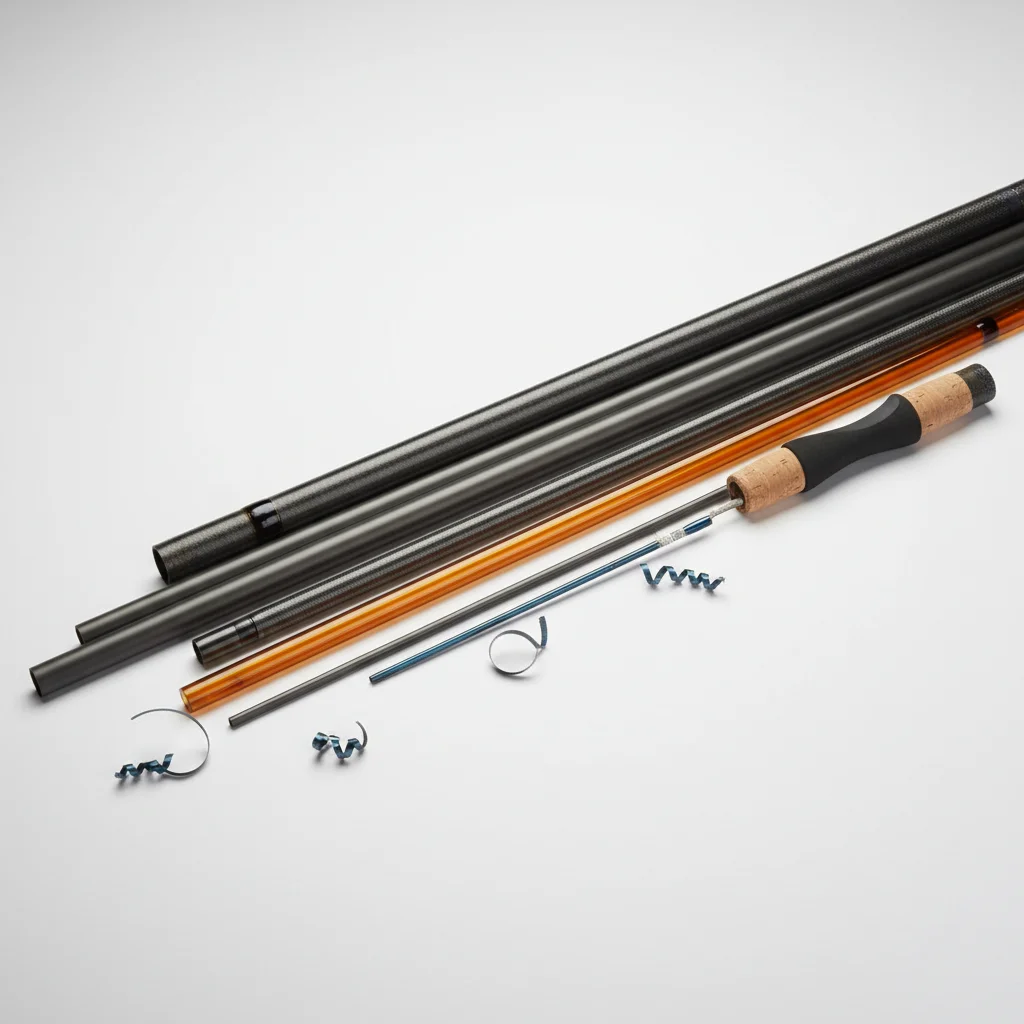
Fishing rod blanks are the foundational, unadorned core of any fishing rod, and understanding their composition is key to appreciating a rod’s performance. Primarily, these blanks are crafted from three main materials: graphite, fiberglass, and composite blends. Each material offers distinct advantages in terms of sensitivity, strength, and flexibility, directly influencing how a rod casts, fights fish, and endures the rigors of angling.
Graphite Rod Blanks: Sensitivity and Lightweight Performance
Graphite is the most popular material for modern fishing rod blanks, prized for its exceptional sensitivity and lightweight properties. The material’s stiffness allows for a quick recovery after casting, translating into longer, more accurate casts. Graphite rods are particularly effective for techniques requiring a high degree of feel, such as finesse fishing or detecting subtle bites. The modulus of graphite, often expressed as IM6, IM7, or IM8, indicates its stiffness and sensitivity; higher modulus graphite is generally stiffer and more sensitive but can also be more brittle. This makes graphite an excellent choice for anglers targeting species that require a delicate touch and precise lure presentation.
The manufacturing process for graphite blanks involves wrapping sheets of graphite pre-impregnated with resin (prepreg) around a tapered steel mandrel. The layers are then cured under heat and pressure, creating a strong, hollow tube. The number of layers and the orientation of the graphite fibers significantly impact the blank’s action and power. For instance, a fast-action rod will have more material concentrated towards the tip, while a moderate-action rod will distribute the material more evenly.
Fiberglass Rod Blanks: Durability and Flexibility
Fiberglass, while heavier and less sensitive than graphite, excels in durability and flexibility. These characteristics make fiberglass rods ideal for applications where brute strength and shock absorption are paramount, such as trolling, deep-sea fishing, or targeting large, powerful fish. The inherent flexibility of fiberglass allows it to bend deeply without breaking, providing a forgiving action that can absorb sudden lunges from a fish, reducing the chance of pulled hooks or snapped lines. Many anglers prefer fiberglass for crankbait fishing due to its ability to load up slowly, allowing fish to fully engulf the lure.
Fiberglass blanks are constructed similarly to graphite, using fiberglass cloth impregnated with resin. However, the material itself is less dense and more elastic. This results in a slower action, which can be beneficial for certain fishing styles. While not as popular for all-around use as graphite, fiberglass maintains a strong presence in specific niches where its unique properties are indispensable.
Composite Rod Blanks: The Best of Both Worlds
|
Our Picks for the Best Fishing Rod in 2026
As an Amazon Associate I earn from qualifying purchases.
|
||
| Num | Product | Action |
|---|---|---|
| 1 | PLUSINNO Fishing Rod and Reel Combos Carbon Fiber Telescopic Fishing Pole with Reel Combo Sea Saltwater Freshwater Kit Fishing Rod Kit |

|
| 2 | PLUSINNO Fishing Gear,Full Fishing kit Include Fishing Rod and Reel Combo, Tackle Box with Fishing Lures, Fishing Accessories, Fishing Pliers,Fishing Gifts for Men with Fishing Tool Kit |
|
| 3 | OKUMATrout Rod |
|
| 4 | PLUSINNO Fishing Rod and Reel Combos Carbon Fiber Telescopic Fishing Pole with Reel Combo Sea Saltwater Freshwater Kit Fishing Rod Kit |
|
| 5 | PLUSINNO Fishing Rod and Reel Combos - Carbon Fiber Telescopic Fishing Pole - Spinning Reel 12 +1 Shielded Bearings Stainless Steel BB |
|
| 6 | Fishing Rod, 6.9ft 2Pcs Telescopic Fishing Rods Set, Carbon Fiber Fishing Pole, 2PCS Spinning Rod and Reel Combo with Carrier Bag Freshwater Fishing Rod and Reel Combos Kits Fishing Gear |
|
| 7 | Sougayilang Fishing Rod Reel Combo with Telescopic Fishing Pole Spinning Reel Carrier Bag for Travel Saltwater Freshwater Fishing |
|
| 8 | PLUSINNO Fishing Rod and Reel Combos Carbon Fiber Telescopic Fishing Pole with Reel Combo Sea Saltwater Freshwater Kit Fishing Rod Kit |
|
| 9 | PLUSINNO Fishing Rod and Reel Combos - Carbon Fiber Telescopic Fishing Pole - Spinning Reel 12 +1 Shielded Bearings Stainless Steel BB |
|
| 10 | Shakespeare Micro Spinning Rod |
|
Composite rod blanks combine the best attributes of both graphite and fiberglass, aiming to create a rod that offers a balance of sensitivity, strength, and flexibility. These blanks typically feature a blend of materials, often with a graphite core for sensitivity and a fiberglass outer layer for durability. The exact ratio and layering of materials can vary widely, allowing manufacturers to fine-tune the rod’s performance for specific fishing applications. For example, a composite rod might offer the backbone needed to fight a large fish while retaining enough tip sensitivity to detect light bites.
The innovation in composite materials continues to push the boundaries of rod design, offering anglers specialized tools for virtually any fishing scenario. These blanks are particularly popular for versatile rods that need to perform well across a range of techniques and target species. They represent a significant advancement in rod technology, providing a middle ground for anglers who don’t want to compromise on either sensitivity or durability.
Other Materials and Construction Techniques
While graphite, fiberglass, and composites form the backbone of most fishing rod blanks, other materials and construction techniques also play a role. Bamboo, for instance, is a traditional material still favored by fly fishermen for its unique feel and aesthetic. Modern bamboo rods are often handcrafted and can offer a surprisingly sensitive and powerful action. Additionally, some high-end rods incorporate exotic materials like boron or titanium into their construction to further enhance specific performance characteristics, such as increased stiffness or reduced weight.
- Unidirectional Fibers: Aligned fibers for maximum strength in one direction.
- Multi-directional Weaves: Interwoven fibers for enhanced durability and torsional strength.
- Resin Systems: Advanced resins improve blank strength and reduce weight.
- Mandrel Taper: Determines the rod’s action and power.
- Scrim Layers: Internal layers that add strength and prevent ovaling.
Choosing the Right Blank Material for Your Needs
Selecting the appropriate fishing rod blank material depends entirely on your fishing style, target species, and personal preferences. If you prioritize sensitivity and lightweight performance for finesse techniques, graphite is likely your best bet. For heavy-duty applications where durability and shock absorption are crucial, fiberglass excels. If you’re looking for a versatile rod that balances both sensitivity and strength, a composite blank offers an excellent solution. Understanding these fundamental differences will empower you to make informed decisions when purchasing or building your next fishing rod, ultimately enhancing your angling experience.
