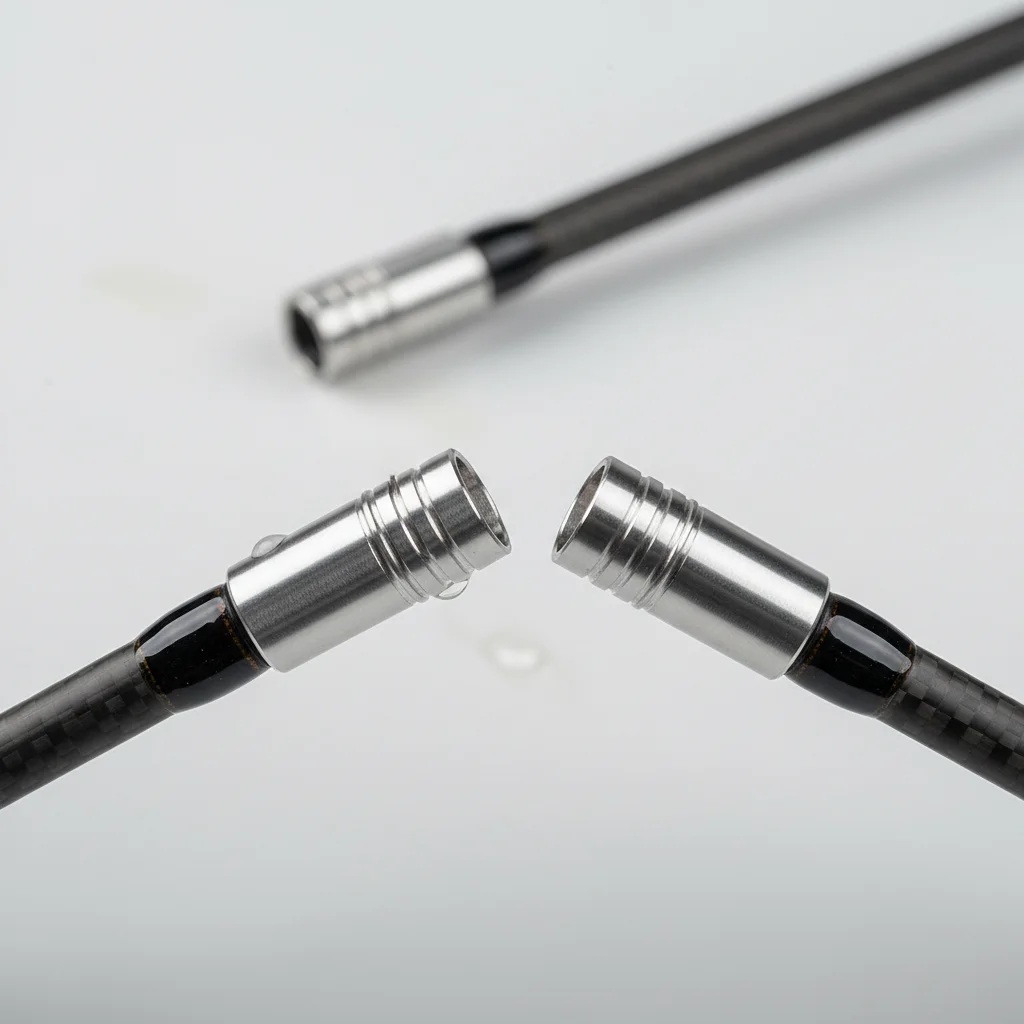
A fishing rod ferrule is a critical component that connects two or more sections of a multi-piece fishing rod, allowing for easy transport and assembly. It ensures a secure and stable connection, maintaining the rod’s intended action and power during casting and fighting fish. There are primarily three types of ferrules: tip-over-butt, spigot, and internal, each designed to offer different levels of strength and flexibility.
The ferrule’s design is crucial for the rod’s overall performance. A well-designed ferrule will create a seamless transition between rod sections, preventing flat spots or weak points that could compromise the rod’s integrity or sensitivity. Understanding how ferrules work can help anglers troubleshoot common issues like loose connections or sticking sections, ensuring their rod performs optimally on the water. For complete fishing rod library on this site.
Tip-Over-Butt Ferrules Explained
The tip-over-butt ferrule is the most common type found on many multi-piece fishing rods. In this design, the male section (tip) slides over the outside of the female section (butt). This creates a strong, self-tightening connection when the rod is flexed, as the pressure from casting and fighting fish helps to seat the sections more firmly together. This design is generally robust and easy to maintain, making it popular for a wide range of fishing applications, from spinning to baitcasting rods.
One of the advantages of the tip-over-butt ferrule is its simplicity and durability. It’s less prone to breakage compared to other types and can withstand significant stress. However, over time, wear can occur, leading to a looser fit. Regular cleaning and proper assembly are key to maintaining its performance.
Spigot Ferrules: Precision and Performance
Spigot ferrules, also known as internal ferrules, are often found on higher-end fishing rods, particularly fly rods and some specialized spinning rods. With a spigot ferrule, a separate, precisely machined plug (the spigot) is permanently glued into the female section of the rod. The male section then slides over this spigot, creating a very tight and precise fit. This design aims to maintain the rod’s continuous taper and action, minimizing any interruption in the blank’s flex.
The primary benefit of a spigot ferrule is its ability to provide a smoother, more continuous bend in the rod, closely mimicking the action of a one-piece rod. This can translate to better casting accuracy and sensitivity. However, spigot ferrules require more careful handling and can be more susceptible to damage if not assembled correctly. They also tend to be more expensive to manufacture.
Internal Ferrules: A Less Common Approach
|
Our Picks for the Best Fishing Rod in 2026
As an Amazon Associate I earn from qualifying purchases.
|
||
| Num | Product | Action |
|---|---|---|
| 1 | Sougayilang Fishing Rod Reel Combo with Telescopic Fishing Pole Spinning Reel Carrier Bag for Travel Saltwater Freshwater Fishing |

|
| 2 | PLUSINNO Fishing Rod and Reel Combos Carbon Fiber Telescopic Fishing Pole with Reel Combo Sea Saltwater Freshwater Kit Fishing Rod Kit |
|
| 3 | Shakespeare Micro Spinning Rod |
|
| 4 | PLUSINNO Fishing Rod and Reel Combos Carbon Fiber Telescopic Fishing Pole with Reel Combo Sea Saltwater Freshwater Kit Fishing Rod Kit |
|
| 5 | PLUSINNO Fishing Rod and Reel Combos - Carbon Fiber Telescopic Fishing Pole - Spinning Reel 12 +1 Shielded Bearings Stainless Steel BB |
|
| 6 | OKUMATrout Rod |
|
| 7 | PLUSINNO Fishing Rod and Reel Combos - Carbon Fiber Telescopic Fishing Pole - Spinning Reel 12 +1 Shielded Bearings Stainless Steel BB |
|
| 8 | Fishing Rod, 6.9ft 2Pcs Telescopic Fishing Rods Set, Carbon Fiber Fishing Pole, 2PCS Spinning Rod and Reel Combo with Carrier Bag Freshwater Fishing Rod and Reel Combos Kits Fishing Gear |
|
| 9 | PLUSINNO Fishing Rod and Reel Combos Carbon Fiber Telescopic Fishing Pole with Reel Combo Sea Saltwater Freshwater Kit Fishing Rod Kit |
|
| 10 | PLUSINNO Fishing Gear,Full Fishing kit Include Fishing Rod and Reel Combo, Tackle Box with Fishing Lures, Fishing Accessories, Fishing Pliers,Fishing Gifts for Men with Fishing Tool Kit |
|
Internal ferrules are less common than tip-over-butt or spigot designs. In this configuration, the male section of the rod slides into the female section, with the connection being entirely internal. This design can offer a very clean aesthetic, as the ferrule is not visible on the exterior of the rod. However, it can sometimes be more challenging to achieve a perfectly tight and durable connection compared to external designs.
While internal ferrules can provide a sleek look, they may not offer the same level of structural integrity or ease of maintenance as tip-over-butt ferrules. They are typically found in specific rod designs where aesthetics or a particular action profile are prioritized.
Maintaining Your Rod’s Ferrules
Proper maintenance of your fishing rod’s ferrules is essential for extending the life and performance of your rod. Here are some key tips:
- Always keep ferrules clean and free of dirt, sand, and debris. Use a damp cloth to wipe them down after each use.
- When assembling, ensure the sections are fully seated but do not twist them excessively, as this can cause wear.
- If a ferrule becomes loose, a small amount of ferrule wax can temporarily improve the fit.
- Never force sections apart if they are stuck. Gently twist and pull, or use a rubber grip aid.
- Inspect ferrules regularly for cracks or signs of wear, especially after heavy use.
Understanding the different types of ferrules and how to care for them will ensure your multi-piece fishing rod remains a reliable tool for years to come. A well-maintained ferrule means a rod that performs consistently, helping you land more fish.For those looking to upgrade their rod, consider models with high-quality ferrule designs that match your fishing style and budget.

I’ve always wondered about the different ferrule types, and this really cleared things up. My old travel rod has a tip-over-butt ferrule, and I’ve noticed how solid it feels when I’m casting. It’s great to understand the engineering behind why it performs so well and how it maintains the rod’s action. Definitely helps me appreciate my gear more.
Good info on ferrules, especially about preventing flat spots. I’ve had issues with a rod where the sections sometimes stick, and it’s a real pain to get apart after a long day. I was hoping for a bit more detail on specific troubleshooting tips for those sticking sections, beyond just understanding the problem. Still, useful to know the ‘why’ behind it.
Excellent breakdown of how ferrules impact rod performance. I never really thought about how crucial the connection between sections is for maintaining sensitivity. My new ultralight rod has internal ferrules, and it feels incredibly responsive, almost like a one-piece. Now I understand why it feels so good when I’m detecting subtle bites.
This was super helpful for understanding why some of my rods feel different. I have a couple of rods with spigot ferrules, and I’ve always liked the smooth bend they provide. Knowing that they’re designed for flexibility and a seamless transition makes a lot of sense. It’s good to know what to look for when buying new multi-piece rods.