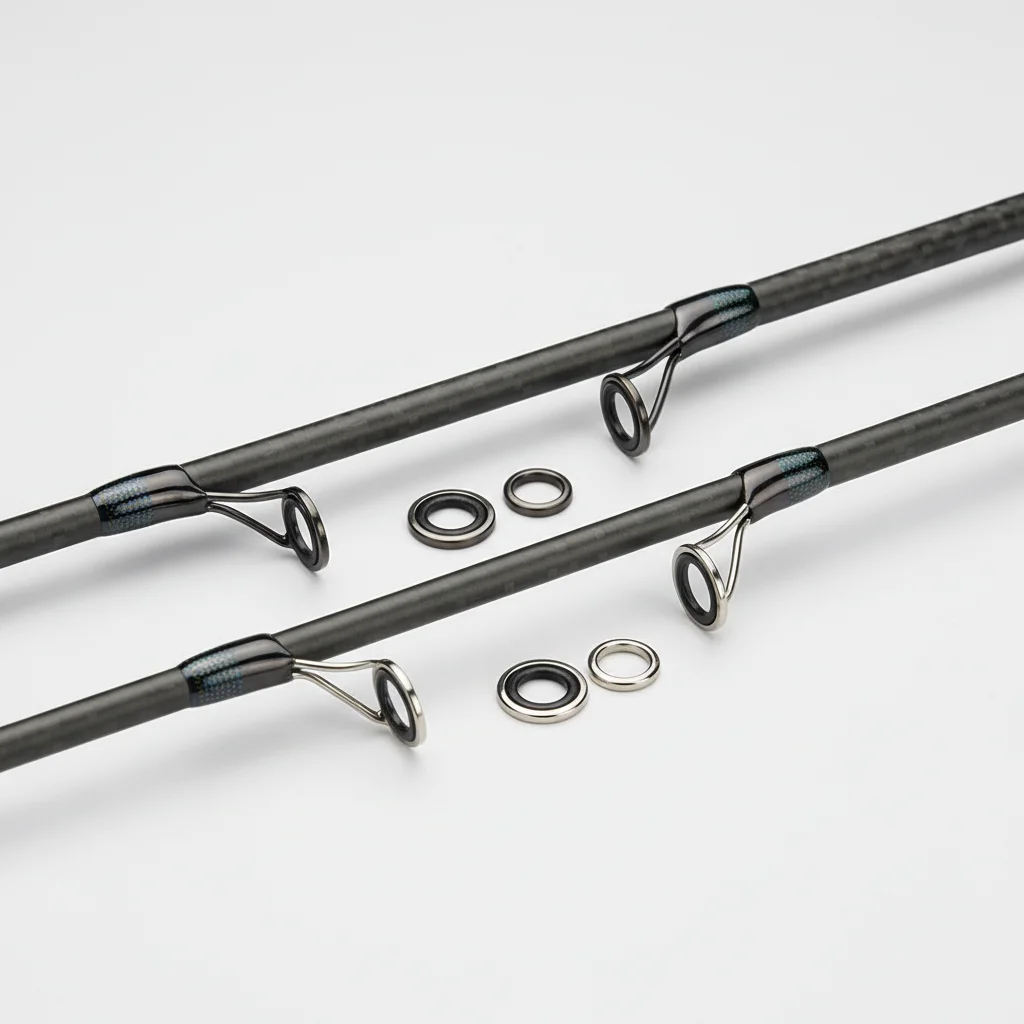
When choosing fishing rod guides, the primary difference in durability lies between ceramic and metal inserts. Ceramic guides, typically made from materials like silicon carbide (SiC) or Alconite, offer superior heat dissipation and reduced line friction, making them ideal for braided lines and heavy use. Metal guides, often stainless steel, are more robust against impact but can cause more line wear over time. For most anglers, ceramic guides provide a better balance of performance and longevity, especially with modern fishing lines.
Understanding Ceramic Fishing Rod Guides
Ceramic guides are engineered for high performance. Materials like SiC are incredibly hard and smooth, which minimizes friction as the fishing line passes through. This reduction in friction not only extends the life of your line but also allows for longer, smoother casts. The excellent heat dissipation properties of ceramic guides are crucial when fighting large fish, as the rapid movement of the line can generate significant heat, which can damage both the line and the guide itself. While ceramic guides are more expensive, their benefits in terms of line protection and casting efficiency often outweigh the initial cost for serious anglers.
Different types of ceramic inserts offer varying levels of performance and cost. Zirconia, for example, is a more affordable ceramic option that still provides good durability and smoothness. Alconite, developed by Fuji, offers a lighter and stronger alternative to traditional ceramics. The choice of ceramic often depends on the specific fishing application and budget, but all ceramic options generally outperform basic metal guides in terms of line management and heat resistance.
Exploring Metal Fishing Rod Guides
Metal fishing rod guides, most commonly made from stainless steel, are known for their ruggedness and resistance to impact. They are a popular choice for entry-level rods or for fishing styles where the rod might be subjected to rough handling. While metal guides are less prone to chipping or cracking than ceramic, they do have some drawbacks. The friction generated by line passing through metal guides can be higher, leading to increased line wear, especially with braided lines. They also don’t dissipate heat as effectively as ceramic, which can be a concern during prolonged fights with strong fish.
Some metal guides are coated with materials like chrome or titanium nitride to improve their smoothness and corrosion resistance. These coatings can enhance performance but still generally don’t match the low friction and heat dissipation of high-quality ceramic inserts. For anglers on a budget or those who prioritize sheer toughness over ultimate casting performance and line longevity, metal guides remain a viable option.
Impact on Casting Performance and Line Life
|
Our Picks for the Best Fishing Rod in 2026
As an Amazon Associate I earn from qualifying purchases.
|
||
| Num | Product | Action |
|---|---|---|
| 1 | PLUSINNO Fishing Rod and Reel Combos - Carbon Fiber Telescopic Fishing Pole - Spinning Reel 12 +1 Shielded Bearings Stainless Steel BB |

|
| 2 | Fishing Rod, 6.9ft 2Pcs Telescopic Fishing Rods Set, Carbon Fiber Fishing Pole, 2PCS Spinning Rod and Reel Combo with Carrier Bag Freshwater Fishing Rod and Reel Combos Kits Fishing Gear |
|
| 3 | PLUSINNO Fishing Gear,Full Fishing kit Include Fishing Rod and Reel Combo, Tackle Box with Fishing Lures, Fishing Accessories, Fishing Pliers,Fishing Gifts for Men with Fishing Tool Kit |
|
| 4 | PLUSINNO Fishing Rod and Reel Combos Carbon Fiber Telescopic Fishing Pole with Reel Combo Sea Saltwater Freshwater Kit Fishing Rod Kit |
|
| 5 | OKUMATrout Rod |
|
| 6 | PLUSINNO Fishing Rod and Reel Combos - Carbon Fiber Telescopic Fishing Pole - Spinning Reel 12 +1 Shielded Bearings Stainless Steel BB |
|
| 7 | Sougayilang Fishing Rod Reel Combo with Telescopic Fishing Pole Spinning Reel Carrier Bag for Travel Saltwater Freshwater Fishing |
|
| 8 | PLUSINNO Fishing Rod and Reel Combos Carbon Fiber Telescopic Fishing Pole with Reel Combo Sea Saltwater Freshwater Kit Fishing Rod Kit |
|
| 9 | PLUSINNO Fishing Rod and Reel Combos Carbon Fiber Telescopic Fishing Pole with Reel Combo Sea Saltwater Freshwater Kit Fishing Rod Kit |
|
| 10 | Shakespeare Micro Spinning Rod |
|
The type of fishing rod guide significantly impacts both casting performance and the lifespan of your fishing line. Ceramic guides, with their ultra-smooth surfaces, allow the line to glide with minimal resistance, resulting in longer and more accurate casts. This reduced friction also means less wear and tear on your line, extending its useful life and preventing premature breakage. For anglers using expensive braided or fluorocarbon lines, the investment in ceramic guides can pay off by protecting their line investment.
Conversely, metal guides, while durable, can introduce more friction. This can slightly reduce casting distance and, more importantly, accelerate line abrasion. Over time, this can lead to weakened lines and increased risk of break-offs. For anglers who frequently fish in abrasive environments or target powerful species, the choice of guide material can be a critical factor in preventing lost fish and damaged gear.
Maintenance and Longevity Considerations
Proper maintenance is key to maximizing the longevity of any fishing rod guide. For ceramic guides, regular cleaning to remove salt, dirt, and line residue is essential to maintain their smooth surface. While ceramic is hard, it can chip or crack if subjected to severe impact, so careful handling is important. Inspecting guides for any signs of damage, such as cracks or rough spots, is crucial to prevent line damage.
- Rinse guides thoroughly with fresh water after each use, especially in saltwater.
- Inspect ceramic inserts for chips or cracks regularly.
- Check for any corrosion on metal guide frames.
- Clean guide surfaces with a soft cloth to remove residue.
- Store rods properly to prevent impact damage to guides.
Metal guides, while more resistant to impact, are susceptible to corrosion, especially in saltwater environments. Regular rinsing and drying are vital to prevent rust from forming on the guide frames. Any signs of rust should be addressed promptly to prevent further degradation. Regardless of the material, a well-maintained set of guides will perform better and last longer, contributing to a more enjoyable and successful fishing experience.
Choosing the Right Guides for Your Fishing Style
The best fishing rod guides for you depend heavily on your specific fishing style, target species, and budget. For light tackle fishing, finesse techniques, or situations where maximum casting distance and line protection are paramount, high-quality ceramic guides are the superior choice. They excel with braided and fluorocarbon lines, offering the sensitivity and smooth performance needed for subtle bites and long casts.
If you primarily engage in heavy-duty fishing, such as catfishing or certain types of saltwater angling where the rod might endure more abuse, or if you are on a tighter budget, robust metal guides might be a more practical option. While they may not offer the same level of line protection or casting smoothness as ceramic, their durability against impact can be a significant advantage. Ultimately, understanding the trade-offs between ceramic and metal guides allows you to make an informed decision that best suits your angling needs.
