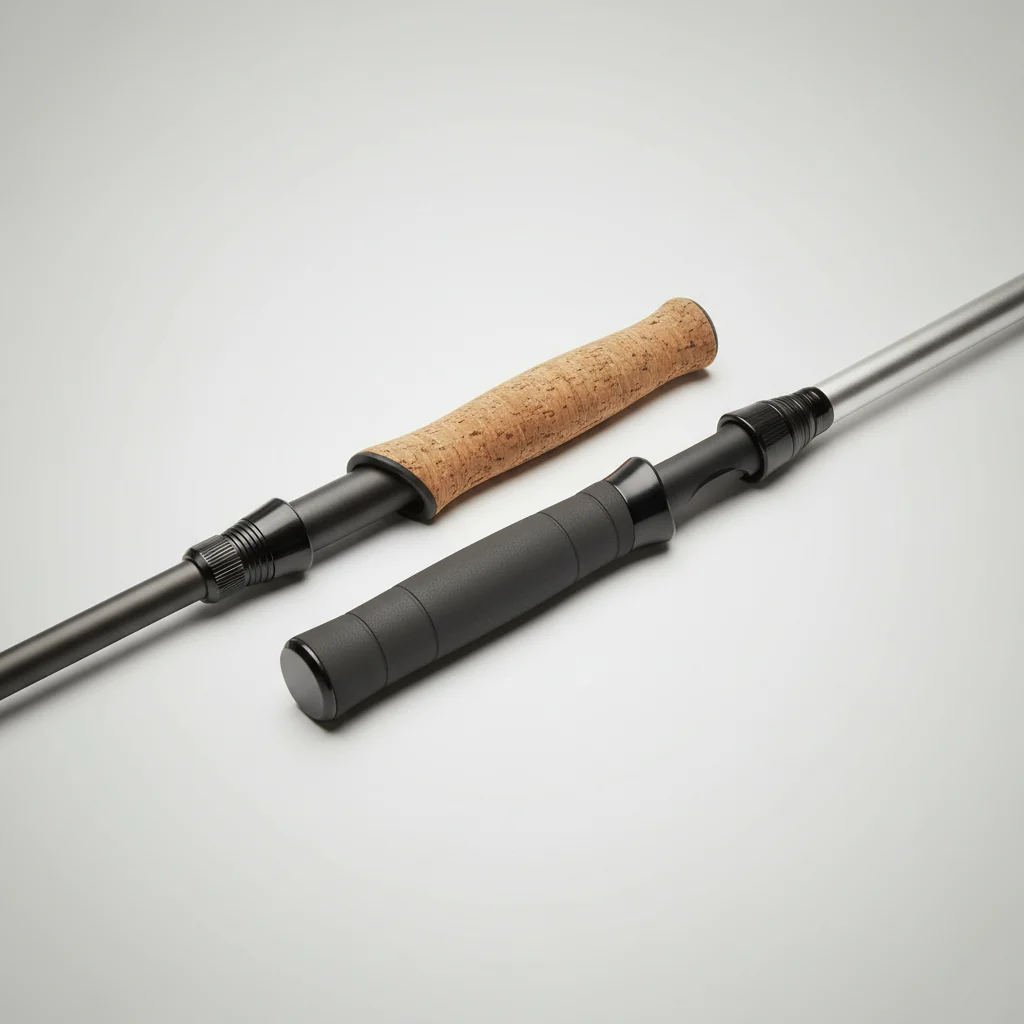
Choosing the right fishing rod handle material is crucial for comfort and performance during long angling sessions. The two primary materials you’ll encounter are cork and EVA foam, each offering distinct advantages and disadvantages. While cork provides superior sensitivity and a classic feel, EVA foam excels in durability and grip, especially when wet. Understanding these differences will help you select the handle that best suits your fishing style and preferences.
The Classic Choice: Cork Handles
Cork has been a staple in fishing rod handles for decades, prized for its natural feel and excellent vibration transfer. This material allows anglers to feel subtle bites and changes in lure action more effectively. High-quality cork, often referred to as Flor grade, is lightweight and offers a comfortable, warm grip even in colder conditions. However, cork can be more susceptible to wear and tear, showing nicks and dirt over time, and may require more careful cleaning.
The aesthetic appeal of cork is undeniable, with its unique patterns and textures adding a touch of traditional elegance to any rod. Many experienced anglers prefer cork for its tactile feedback, which they believe enhances their connection to the lure and the fish. Proper maintenance, such as occasional cleaning with a mild soap solution, can help preserve its appearance and longevity.
The Modern Alternative: EVA Foam Handles
EVA (Ethylene-vinyl acetate) foam handles have gained significant popularity due to their durability, comfort, and resistance to environmental factors. This synthetic material is less prone to chipping or cracking than cork and is highly resistant to water, UV rays, and chemicals. EVA foam provides a firm, non-slip grip, which is particularly beneficial when your hands are wet or slimy from handling fish. It’s also generally easier to clean than cork, often just requiring a simple wipe-down.
While EVA foam might not offer the same level of sensitivity as cork, its robust nature makes it a favorite for anglers who fish in harsh conditions or prefer a low-maintenance option. It comes in various densities and colors, allowing for more customization in rod design. Many entry-level and mid-range rods feature EVA foam handles due to their cost-effectiveness and resilience.
Sensitivity and Feedback: Which Material Wins?
For anglers prioritizing sensitivity, cork generally holds the edge. Its natural composition allows for better transmission of vibrations from the line and blank directly to your hand. This can be a significant advantage when fishing with finesse techniques or targeting species with subtle bites. The ability to feel every bump, tick, and change in current can lead to more successful hooksets.
EVA foam, while still providing adequate feedback, tends to dampen vibrations slightly more than cork. However, advancements in EVA technology have led to denser, more sensitive foams that bridge this gap. Ultimately, the perceived difference in sensitivity can be subjective and may vary depending on the quality of the rod blank and other components.
Durability and Maintenance Considerations
When it comes to durability, EVA foam is the clear winner. It’s designed to withstand more abuse, making it ideal for anglers who are tough on their gear or fish frequently in challenging environments. EVA foam is less likely to show signs of wear, such as indentations or discoloration, and is generally more resistant to impacts.
Cork, while durable in its own right, requires a bit more care. It can become stained over time from dirt, fish slime, and sunscreen. While some stains can be removed, deep-seated grime might be permanent. However, many anglers appreciate the way cork

I picked up a rod with an EVA foam handle because I heard it was great for grip, but I’ve found it gets a bit slick with certain types of fish slime. It’s not terrible, but I was expecting a bit more consistent grip in all conditions. It’s still comfortable for long sessions, though, and seems pretty tough, so it’s not a total loss.
I recently switched to an EVA foam handle rod for my saltwater fishing, and I’m really impressed with the durability. It holds up so much better to the elements and the constant abuse of boat fishing. The grip when wet is also a huge plus, no more slipping when I’m trying to land a big one. I do miss a little of that classic feel, but the practicality wins out for me.
My old cork handle rod was starting to show some serious wear, and I was debating what to get next. This really helped me understand the pros and cons. I ended up going with another cork handle, specifically a high-quality Flor grade, because I just can’t give up that natural feel and warmth in colder weather. It’s worth the extra care for me.
I’ve always been a cork handle guy, and this post really nailed why. That superior sensitivity is a game-changer for me, especially when I’m trying to feel those light bites from finicky bass. My Flor grade cork rod feels like an extension of my arm, and it’s super comfortable even after hours on the water. Definitely sticking with cork for my next purchase.