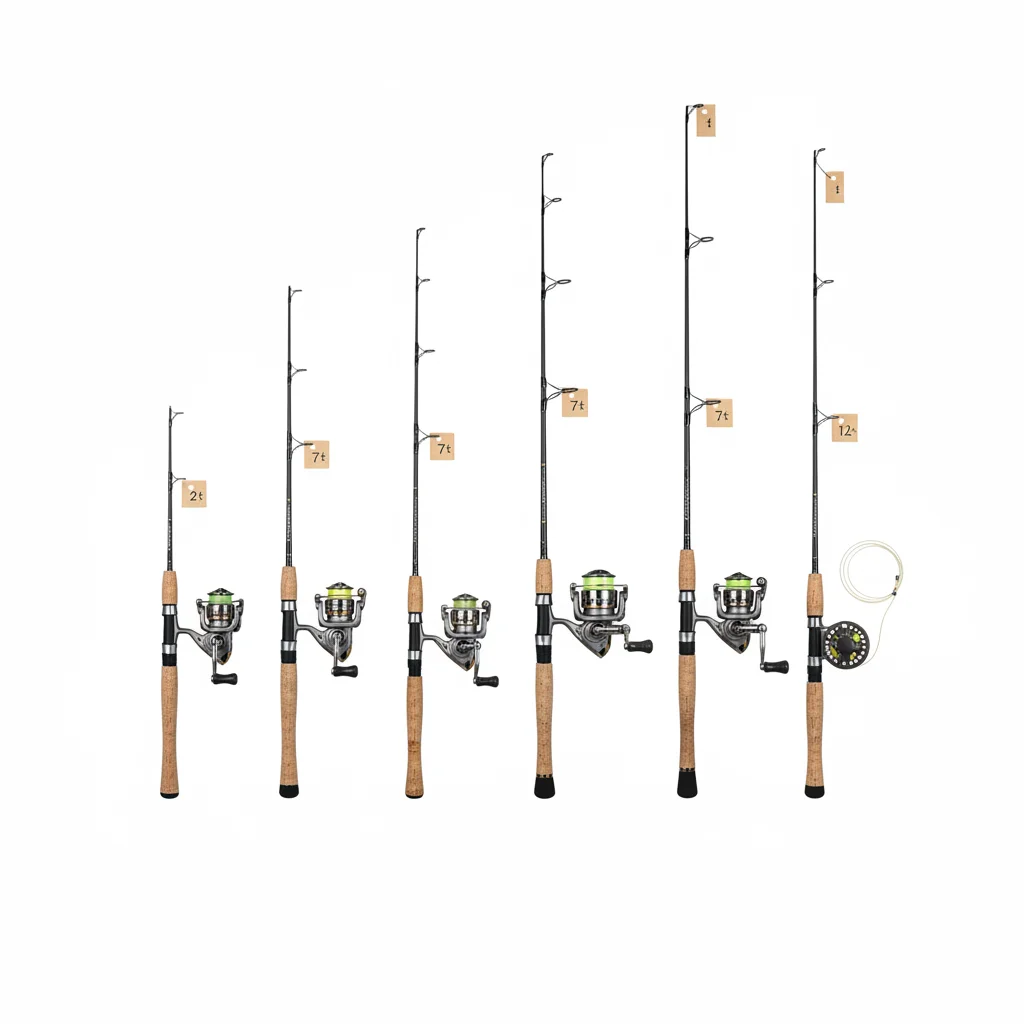
Fishing rod length significantly impacts your casting distance, accuracy, and the type of fish you can effectively target. Generally, rods range from 4 to 14 feet, with the most common lengths for general freshwater and light saltwater fishing falling between 6 and 8 feet. The ideal length depends on your fishing environment, target species, and preferred casting technique.
Understanding the Impact of Rod Length on Casting
Longer fishing rods typically allow for greater casting distance. This is due to the increased leverage they provide, which helps to load the rod more effectively during the cast, propelling your lure or bait further. Anglers targeting species in open water or needing to cover large areas, such as surf fishing or some types of bass fishing, often prefer longer rods. However, longer rods can be more challenging to handle in tight spaces or when precision casting is required. For see our fishing rod recommendations on this site.
Conversely, shorter fishing rods offer superior accuracy and control. Their reduced length makes them easier to maneuver, allowing for more precise lure placement, especially when fishing around obstacles like docks, trees, or heavy cover. Shorter rods are also excellent for jigging or vertical presentations where long casts are not necessary. They are often favored by kayak anglers or those fishing in small streams.
Rod Length and Fish Fighting Dynamics
The length of your fishing rod also plays a crucial role in how you fight a fish. Longer rods provide more leverage against a fish, which can be beneficial when trying to turn a large fish or keep it away from structure. The increased flex in a longer rod can also act as a shock absorber, reducing the chance of line breakage when a fish makes a sudden run. This is particularly important when using lighter lines or targeting powerful species.
Shorter rods, while offering less leverage, can provide more direct control over a fish. They allow for quicker reactions and can be advantageous when needing to quickly pull a fish out of heavy cover before it can snag your line. The direct feel of a shorter rod can also help anglers detect subtle bites and react faster, which is critical in finesse fishing situations.
Choosing the Right Length for Your Fishing Style
|
Our Picks for the Best Fishing Rod in 2026
As an Amazon Associate I earn from qualifying purchases.
|
||
| Num | Product | Action |
|---|---|---|
| 1 | PLUSINNO Fishing Rod and Reel Combos - Carbon Fiber Telescopic Fishing Pole - Spinning Reel 12 +1 Shielded Bearings Stainless Steel BB |

|
| 2 | Fishing Rod, 6.9ft 2Pcs Telescopic Fishing Rods Set, Carbon Fiber Fishing Pole, 2PCS Spinning Rod and Reel Combo with Carrier Bag Freshwater Fishing Rod and Reel Combos Kits Fishing Gear |
|
| 3 | Shakespeare Micro Spinning Rod |
|
| 4 | Sougayilang Fishing Rod Reel Combo with Telescopic Fishing Pole Spinning Reel Carrier Bag for Travel Saltwater Freshwater Fishing |
|
| 5 | PLUSINNO Fishing Rod and Reel Combos Carbon Fiber Telescopic Fishing Pole with Reel Combo Sea Saltwater Freshwater Kit Fishing Rod Kit |
|
| 6 | PLUSINNO Fishing Rod and Reel Combos Carbon Fiber Telescopic Fishing Pole with Reel Combo Sea Saltwater Freshwater Kit Fishing Rod Kit |
|
| 7 | PLUSINNO Fishing Gear,Full Fishing kit Include Fishing Rod and Reel Combo, Tackle Box with Fishing Lures, Fishing Accessories, Fishing Pliers,Fishing Gifts for Men with Fishing Tool Kit |
|
| 8 | PLUSINNO Fishing Rod and Reel Combos - Carbon Fiber Telescopic Fishing Pole - Spinning Reel 12 +1 Shielded Bearings Stainless Steel BB |
|
| 9 | OKUMATrout Rod |
|
| 10 | PLUSINNO Fishing Rod and Reel Combos Carbon Fiber Telescopic Fishing Pole with Reel Combo Sea Saltwater Freshwater Kit Fishing Rod Kit |
|
Selecting the appropriate fishing rod length is a balance between casting distance, accuracy, and fish-fighting capability. For general-purpose fishing, a medium-length rod (around 6.5 to 7 feet) offers a good compromise. For specialized techniques, consider the following:
- Surf Fishing: 10-14 feet for maximum casting distance over waves.
- Fly Fishing: 8.5-9 feet for versatile casting and line control.
- Kayak Fishing: 5.5-7 feet for maneuverability in confined spaces.
- Bass Fishing (Open Water): 7-7.5 feet for long casts with various lures.
- Ice Fishing: 2-4 feet for jigging in small holes.
Always consider the specific conditions and species you’ll be targeting. A rod that is too long for a small stream will be cumbersome, just as a rod that is too short for surf casting will limit your reach.
Regional Preferences and Rod Length
Fishing rod length preferences can also vary significantly by region and local fishing traditions. For instance, in some parts of the Pacific Northwest, longer salmon and steelhead rods are common due to the need for long casts and powerful fish. In contrast, anglers in the Florida Keys might prefer shorter, more powerful rods for battling strong offshore species from a boat. Understanding these regional nuances can help you make a more informed decision, especially if you’re fishing in a new area.
Maintenance Considerations for Different Rod Lengths
Maintaining fishing rods of various lengths involves similar principles but with some practical differences. Longer rods require more space for storage and transport, making rod socks or cases essential to prevent tangles and damage. When cleaning, ensure you have enough clear space to properly wipe down the entire length of the blank and guides. Shorter rods are generally easier to clean and store, but their guides can still be prone to damage if not handled carefully. Always inspect all guides for cracks or wear, regardless of rod length, as damaged guides can fray your line.

I always struggled with getting my lure out far enough, especially when fishing from the shore on larger lakes. After reading about how longer rods improve casting distance, I finally invested in an 8-foot rod. What a difference! I’m reaching spots I never could before, and my catch rate has definitely gone up. Highly recommend paying attention to rod length for open water fishing.
I’ve been using a 6-foot rod for years for general freshwater fishing, and it’s been pretty reliable. The info here about how rod length affects accuracy really resonated with me. I’m thinking about trying a slightly shorter rod for some of the tighter, brushy spots I fish. It’s good to know there’s a specific reason why my current rod feels a bit unwieldy in those situations.
I do a lot of surf fishing, and the mention of longer rods being ideal for that really hit home. I’ve always used a 10-foot rod, and it’s perfect for getting my bait past the breakers. The explanation about increased leverage for greater casting distance makes so much sense. It’s great to understand the ‘why’ behind what I already knew worked well.
I picked up a 7-foot rod hoping it would be a good all-around option for both my river and lake trips. While it’s decent for the lake, I found it a bit too long for the smaller river spots where I need more precision around obstacles. It’s definitely harder to handle in tight spaces, which was a bit of a bummer. Next time I’ll probably go for something closer to 5 or 6 feet for the river.