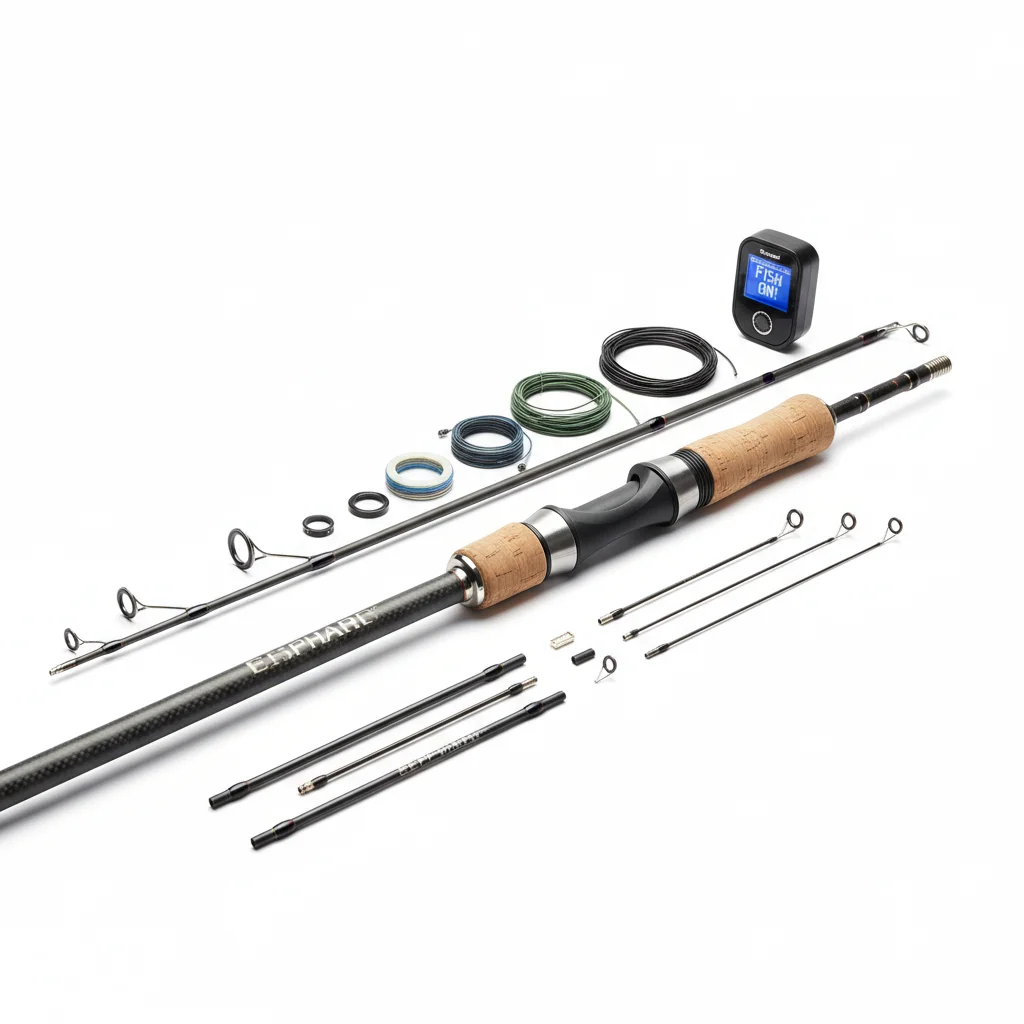
Fishing rod sensitivity is a crucial factor that can significantly improve your catch rate by allowing you to detect subtle bites and changes in the underwater environment. A sensitive rod transmits vibrations from the line to your hand, giving you a better understanding of what’s happening beneath the surface. This enhanced feedback can lead to a 20-30% increase in successful hooksets, especially when targeting finicky fish or using finesse techniques.
Understanding Fishing Rod Sensitivity
Sensitivity in a fishing rod refers to its ability to transmit vibrations from the line to the angler’s hand. This is primarily influenced by the rod’s material, construction, and design. A more sensitive rod allows you to feel everything from a light tap of a fish to the texture of the bottom, enabling quicker reactions and more precise lure presentations. It’s not just about feeling the bite; it’s about understanding the underwater world.
Materials That Enhance Sensitivity
The material composition of a fishing rod plays a pivotal role in its sensitivity. Graphite is widely recognized as the most sensitive material, with higher modulus graphite offering superior vibration transmission. While fiberglass rods are durable, they generally lack the sensitivity of graphite. Composite rods, a blend of graphite and fiberglass, offer a balance of sensitivity and durability, making them a popular choice for various fishing styles. The density and stiffness of the material directly impact how efficiently vibrations travel from the tip to the handle.
How Rod Construction Affects Feel
Beyond material, the construction of the rod blank and its components significantly impact sensitivity. A one-piece rod is inherently more sensitive than a multi-piece rod because there are no ferrules to interrupt the transmission of vibrations. The type and number of guides also play a role; smaller, lighter guides with ceramic inserts reduce friction and allow vibrations to travel more freely. The design of the handle and reel seat can also influence how well vibrations are transferred to your hand, with direct contact designs often being preferred for maximum sensitivity.
- Graphite rods offer the highest sensitivity for detecting subtle bites.
- One-piece rod construction maximizes vibration transmission.
- Smaller, lighter guides with ceramic inserts improve feel.
- Direct contact reel seats enhance sensitivity to the angler’s hand.
- High-quality components throughout the rod contribute to overall responsiveness.
The Role of Rod Action and Power
|
Our Picks for the Best Fishing Rod in 2026
As an Amazon Associate I earn from qualifying purchases.
|
||
| Num | Product | Action |
|---|---|---|
| 1 | PLUSINNO Fishing Gear,Full Fishing kit Include Fishing Rod and Reel Combo, Tackle Box with Fishing Lures, Fishing Accessories, Fishing Pliers,Fishing Gifts for Men with Fishing Tool Kit |

|
| 2 | PLUSINNO Fishing Rod and Reel Combos - Carbon Fiber Telescopic Fishing Pole - Spinning Reel 12 +1 Shielded Bearings Stainless Steel BB |
|
| 3 | PLUSINNO Fishing Rod and Reel Combos Carbon Fiber Telescopic Fishing Pole with Reel Combo Sea Saltwater Freshwater Kit Fishing Rod Kit |
|
| 4 | PLUSINNO Fishing Rod and Reel Combos Carbon Fiber Telescopic Fishing Pole with Reel Combo Sea Saltwater Freshwater Kit Fishing Rod Kit |
|
| 5 | Shakespeare Micro Spinning Rod |
|
| 6 | PLUSINNO Fishing Rod and Reel Combos - Carbon Fiber Telescopic Fishing Pole - Spinning Reel 12 +1 Shielded Bearings Stainless Steel BB |
|
| 7 | OKUMATrout Rod |
|
| 8 | Sougayilang Fishing Rod Reel Combo with Telescopic Fishing Pole Spinning Reel Carrier Bag for Travel Saltwater Freshwater Fishing |
|
| 9 | PLUSINNO Fishing Rod and Reel Combos Carbon Fiber Telescopic Fishing Pole with Reel Combo Sea Saltwater Freshwater Kit Fishing Rod Kit |
|
| 10 | Fishing Rod, 6.9ft 2Pcs Telescopic Fishing Rods Set, Carbon Fiber Fishing Pole, 2PCS Spinning Rod and Reel Combo with Carrier Bag Freshwater Fishing Rod and Reel Combos Kits Fishing Gear |
|
While often confused with sensitivity, rod action and power are distinct but related characteristics. Action refers to where the rod bends along its length, with faster actions (tip bends) generally being more sensitive as they transmit vibrations more directly. Power, on the other hand, is the rod’s lifting strength. A rod with the appropriate power for your target species and lure weight will allow for better control and feel, indirectly contributing to perceived sensitivity. Matching these characteristics to your fishing style is key.
Practical Benefits of a Sensitive Rod
The practical benefits of using a sensitive fishing rod are numerous. Anglers can detect light bites from wary fish, feel the subtle changes in bottom composition, and even discern when their lure is fouled with weeds. This heightened awareness allows for more timely hooksets, better lure control, and ultimately, more fish in the net. Whether you’re drop-shotting for bass or finesse fishing for trout, a sensitive rod provides a distinct advantage.Investing in a high-quality, sensitive rod can truly elevate your fishing experience and success rate.
Choosing the Right Sensitive Rod for You
When selecting a sensitive fishing rod, consider your primary fishing style, target species, and budget. For finesse techniques and light bites, a high-modulus graphite rod with a fast action is often ideal. For more general-purpose fishing, a quality composite rod might offer a good balance. Always hold the rod and feel its balance and responsiveness before purchasing. Don’t forget to pair it with a sensitive line, such as braided line, to maximize the rod’s potential.A well-matched rod and line combination will provide the ultimate in sensitivity and feedback.
