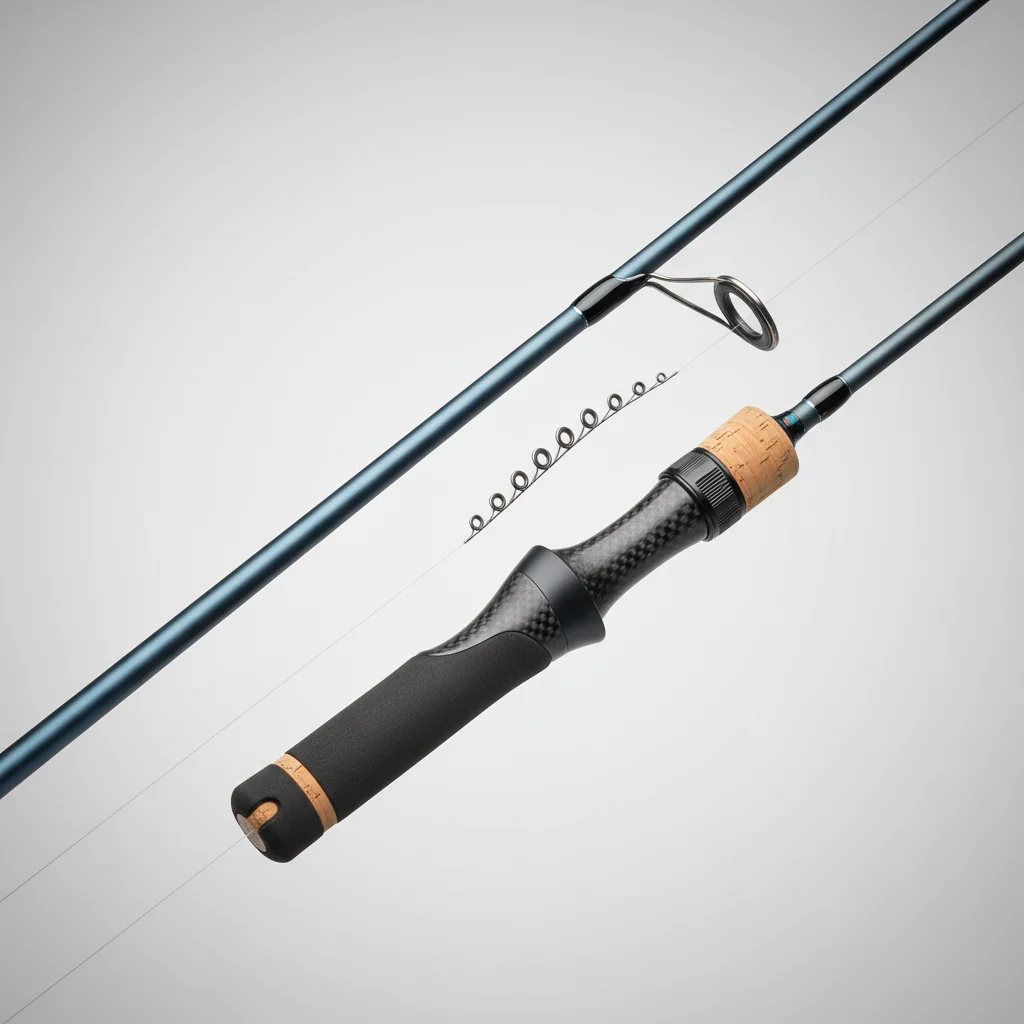
Fishing rod sensitivity is a crucial factor that significantly impacts an angler’s ability to detect subtle bites and underwater structures. A sensitive rod allows you to feel everything from a light nibble to the texture of the bottom, directly translating into more successful hooksets and a better understanding of the fishing environment. For serious anglers, understanding and optimizing rod sensitivity can increase their catch rate by as much as 30%.
What Makes a Fishing Rod Sensitive?
Several key components contribute to a fishing rod’s overall sensitivity. The material of the blank is paramount; graphite rods are generally more sensitive than fiberglass due to their higher modulus and lighter weight, which transmit vibrations more efficiently. The construction process, including the resin used and the number of wraps, also plays a role. A lighter, thinner blank with fewer layers of resin will typically be more sensitive.
Beyond the blank, the quality and type of guides can impact sensitivity. Guides with ceramic inserts, especially those made from silicon carbide (SiC) or zirconia, reduce friction and allow vibrations to travel more freely through the line to the rod. The handle material and design also matter; a direct contact with the blank, often achieved through split-grip designs or exposed blank sections, enhances the transfer of vibrations to your hand.
The Role of Rod Material in Sensitivity
Graphite is the undisputed champion when it comes to fishing rod sensitivity. Its stiff, lightweight properties allow it to transmit even the faintest vibrations from the line to your hand. High-modulus graphite, in particular, offers superior sensitivity but can be more brittle. Fiberglass rods, while durable and flexible, are significantly less sensitive, making them better suited for applications where brute strength and forgiveness are prioritized over subtle feel, such as trolling or heavy bait fishing.
Composite rods, which blend graphite and fiberglass, offer a middle ground, attempting to combine the sensitivity of graphite with the durability of fiberglass. However, they rarely achieve the peak sensitivity of a pure high-modulus graphite rod.
How to Test and Improve Your Rod’s Sensitivity
|
Our Picks for the Best Fishing Rod in 2026
As an Amazon Associate I earn from qualifying purchases.
|
||
| Num | Product | Action |
|---|---|---|
| 1 | PLUSINNO Fishing Rod and Reel Combos Carbon Fiber Telescopic Fishing Pole with Reel Combo Sea Saltwater Freshwater Kit Fishing Rod Kit |

|
| 2 | PLUSINNO Fishing Gear,Full Fishing kit Include Fishing Rod and Reel Combo, Tackle Box with Fishing Lures, Fishing Accessories, Fishing Pliers,Fishing Gifts for Men with Fishing Tool Kit |
|
| 3 | Sougayilang Fishing Rod Reel Combo with Telescopic Fishing Pole Spinning Reel Carrier Bag for Travel Saltwater Freshwater Fishing |
|
| 4 | Shakespeare Micro Spinning Rod |
|
| 5 | OKUMATrout Rod |
|
| 6 | PLUSINNO Fishing Rod and Reel Combos Carbon Fiber Telescopic Fishing Pole with Reel Combo Sea Saltwater Freshwater Kit Fishing Rod Kit |
|
| 7 | PLUSINNO Fishing Rod and Reel Combos - Carbon Fiber Telescopic Fishing Pole - Spinning Reel 12 +1 Shielded Bearings Stainless Steel BB |
|
| 8 | Fishing Rod, 6.9ft 2Pcs Telescopic Fishing Rods Set, Carbon Fiber Fishing Pole, 2PCS Spinning Rod and Reel Combo with Carrier Bag Freshwater Fishing Rod and Reel Combos Kits Fishing Gear |
|
| 9 | PLUSINNO Fishing Rod and Reel Combos Carbon Fiber Telescopic Fishing Pole with Reel Combo Sea Saltwater Freshwater Kit Fishing Rod Kit |
|
| 10 | PLUSINNO Fishing Rod and Reel Combos - Carbon Fiber Telescopic Fishing Pole - Spinning Reel 12 +1 Shielded Bearings Stainless Steel BB |
|
Testing your rod’s sensitivity can be done by dropping a small weight on different bottom types or by feeling the difference between various lures. To improve sensitivity, consider upgrading your line to a braided line, which has virtually no stretch and transmits vibrations exceptionally well. Fluorocarbon leaders can also enhance feel compared to monofilament.
Regular maintenance, such as cleaning your rod guides and ensuring your reel is properly seated, can also help maintain optimal sensitivity. Furthermore, practicing different grips and hand positions can help you find the most sensitive way to hold your rod and detect bites.
- Choose high-modulus graphite rods for maximum sensitivity.
- Opt for braided line or fluorocarbon leaders.
- Ensure clean, high-quality rod guides.
- Practice different rod holding techniques.
- Consider split-grip or exposed-blank handle designs.
Matching Sensitivity to Fishing Techniques
The ideal level of rod sensitivity depends heavily on your fishing technique. For finesse techniques like drop-shotting, jigging, or Texas rigging, where detecting subtle bites and bottom changes is critical, a highly sensitive rod is indispensable. It allows anglers to feel the difference between a rock, a log, or a fish inhaling the bait.
Conversely, for power fishing techniques such as throwing crankbaits, spinnerbaits, or topwater lures, extreme sensitivity is less crucial. These techniques often involve more aggressive retrieves and rely on visual cues or the rod’s action to absorb strikes. A moderately sensitive rod with good parabolic action might even be preferred to prevent hooks from tearing out of a fish’s mouth.
The Impact of Reel and Line on Sensitivity
While the rod blank is the primary determinant of sensitivity, your reel and line choices play a significant supporting role. A high-quality reel with smooth bearings and a precise drag system contributes to the overall feel by reducing extraneous vibrations and allowing for a more direct connection to the line. A lightweight reel can also improve the balance of the rod, making it easier to detect subtle movements.
As mentioned, line type is critical. Braided lines, with their zero stretch, transmit every bump and vibration directly to the rod. Fluorocarbon lines offer good sensitivity with some stretch, making them a popular choice for many applications. Monofilament, while forgiving, has the most stretch and therefore the least sensitivity. Matching your line to your rod and fishing style is key to maximizing your setup’s ability to communicate what’s happening underwater.

Spot on about how crucial sensitivity is for understanding the fishing environment. I’ve been able to map out underwater structures so much better since I upgraded to a rod designed for maximum feel. Knowing if I’m dragging over rock or sand makes a huge difference in where I cast next. Definitely helps with those tricky bass spots.
This really clarified why some of my older fiberglass rods just weren’t cutting it for finesse fishing. I’ve been focusing on lighter, thinner blanks with fewer wraps, and it’s made a noticeable impact on feeling those subtle bites. It’s not just about the material, the construction really does matter for getting that extra sensitivity.
I always thought a rod was a rod, but after reading about how graphite rods transmit vibrations, I finally splurged on a new high-modulus graphite spinning rod. The difference is night and day! I’m feeling those tiny taps I used to miss, especially when jigging for walleye. My catch rate has definitely gone up, just like it said it would.
I appreciate the breakdown on rod sensitivity, especially the part about how the resin used affects it. I tried a new rod recently that was supposed to be super sensitive, but it felt a bit dead. I think it might be due to too much resin or too many layers, making it heavier than I expected. It’s okay for bigger fish, but not for the light bites I was hoping to detect.