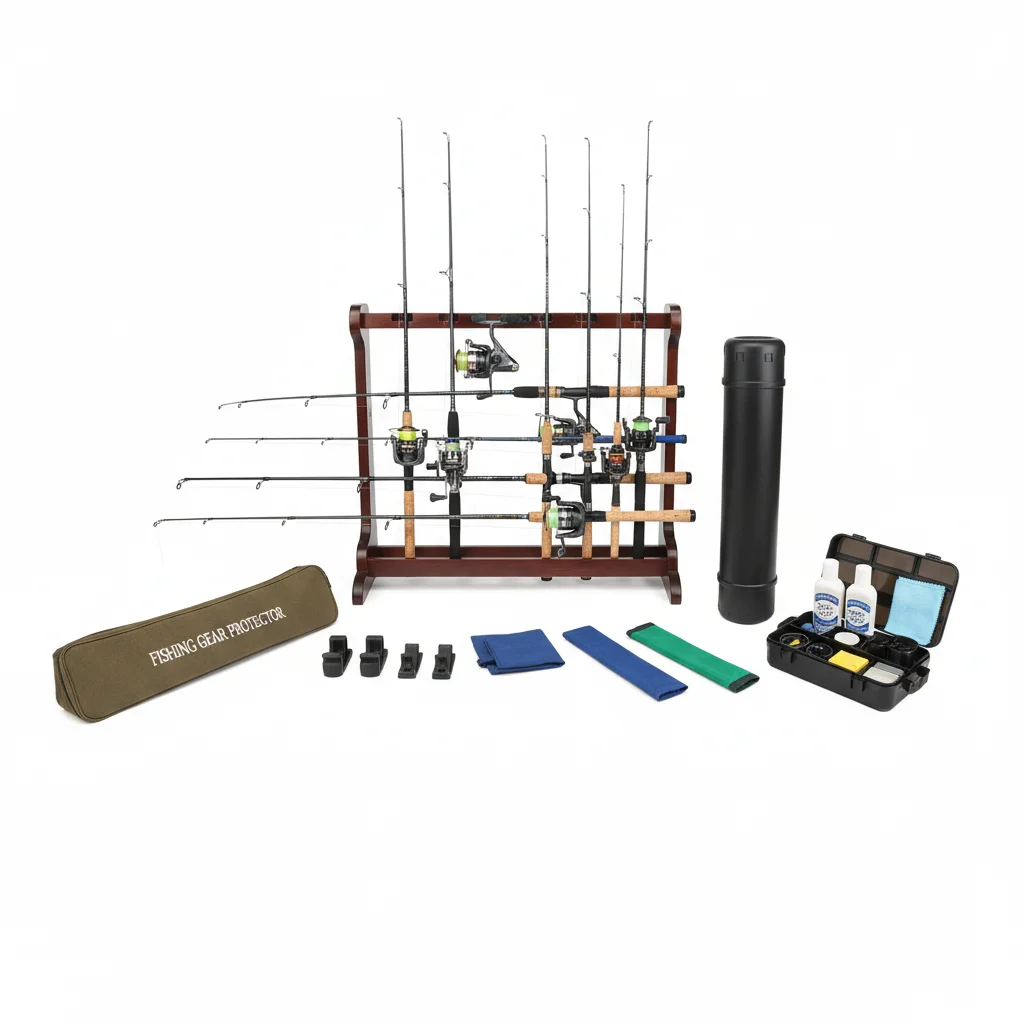
Proper fishing rod storage is crucial for protecting your valuable gear from damage and extending its lifespan. There are three primary methods for effective storage: wall-mounted racks, ceiling-mounted racks, and freestanding rod holders. Each method offers distinct advantages depending on your available space and the number of rods you need to store.
Why Proper Storage Matters for Your Fishing Rods
Leaving fishing rods haphazardly in a corner or leaning against a wall can lead to various forms of damage. Tips can snap, guides can bend, and blanks can warp over time. Investing in a dedicated storage solution not only protects your investment but also keeps your fishing area organized and ready for your next outing. This preventative measure saves you money on repairs and replacements in the long run.
Wall-Mounted Fishing Rod Racks
Wall-mounted racks are an excellent space-saving solution, particularly for garages, sheds, or even inside your home. They typically consist of two pieces that secure to the wall, holding the rod vertically or horizontally. Vertical storage is ideal for longer rods, preventing them from bowing, while horizontal storage can be great for displaying prized rods. Ensure the rack is installed securely into studs to support the weight of multiple rods.
Ceiling-Mounted Fishing Rod Racks
|
Our Picks for the Best Fishing Rod in 2026
As an Amazon Associate I earn from qualifying purchases.
|
||
| Num | Product | Action |
|---|---|---|
| 1 | OKUMATrout Rod |

|
| 2 | Sougayilang Fishing Rod Reel Combo with Telescopic Fishing Pole Spinning Reel Carrier Bag for Travel Saltwater Freshwater Fishing |
|
| 3 | Fishing Rod, 6.9ft 2Pcs Telescopic Fishing Rods Set, Carbon Fiber Fishing Pole, 2PCS Spinning Rod and Reel Combo with Carrier Bag Freshwater Fishing Rod and Reel Combos Kits Fishing Gear |
|
| 4 | PLUSINNO Fishing Rod and Reel Combos Carbon Fiber Telescopic Fishing Pole with Reel Combo Sea Saltwater Freshwater Kit Fishing Rod Kit |
|
| 5 | PLUSINNO Fishing Rod and Reel Combos Carbon Fiber Telescopic Fishing Pole with Reel Combo Sea Saltwater Freshwater Kit Fishing Rod Kit |
|
| 6 | PLUSINNO Fishing Rod and Reel Combos - Carbon Fiber Telescopic Fishing Pole - Spinning Reel 12 +1 Shielded Bearings Stainless Steel BB |
|
| 7 | Shakespeare Micro Spinning Rod |
|
| 8 | PLUSINNO Fishing Gear,Full Fishing kit Include Fishing Rod and Reel Combo, Tackle Box with Fishing Lures, Fishing Accessories, Fishing Pliers,Fishing Gifts for Men with Fishing Tool Kit |
|
| 9 | PLUSINNO Fishing Rod and Reel Combos - Carbon Fiber Telescopic Fishing Pole - Spinning Reel 12 +1 Shielded Bearings Stainless Steel BB |
|
| 10 | PLUSINNO Fishing Rod and Reel Combos Carbon Fiber Telescopic Fishing Pole with Reel Combo Sea Saltwater Freshwater Kit Fishing Rod Kit |
|
For those with limited wall space, ceiling-mounted racks offer an ingenious way to store rods out of the way. These systems often utilize the unused overhead space in garages or basements. They are particularly effective for storing multiple rods horizontally, keeping them safe from accidental bumps and knocks. When installing, always verify the ceiling joists for secure attachment to prevent any mishaps.
Freestanding Fishing Rod Holders
Freestanding rod holders provide flexibility and portability, making them suitable for apartments, boats, or areas where permanent installation isn’t feasible. These units come in various designs, from simple round bases that hold rods vertically to more elaborate cabinets. They are easy to move and can accommodate a range of rod sizes and types. Consider models with padded slots to prevent scratching your rod blanks.
Essential Tips for Long-Term Rod Protection
- Always clean and dry your rods thoroughly before storing them to prevent corrosion and mildew.
- Loosen the drag on your reels to relieve tension on the springs.
- Store rods in a climate-controlled environment to avoid extreme temperature fluctuations.
- Use rod sleeves or socks for individual rods to prevent scratches and tangles.
- Periodically inspect your stored rods for any signs of wear or damage.
Choosing the Right Storage Solution
The best fishing rod storage solution depends on several factors, including the number of rods you own, the available space, and your budget. For a small collection and limited space, a simple wall-mounted rack might suffice. If you have a large collection and a dedicated fishing area, a combination of ceiling and freestanding options could be ideal. Always prioritize solutions that keep your rods secure, protected, and easily accessible.
