A two-piece fishing rod that refuses to separate after a fishing trip can be safely unjammed at home using specific techniques like the “knees and grip” method, temperature contrast, or a two-person pull. These methods leverage mechanical advantage and material science to separate the sections without causing damage to the rod blank or ferrules. Always prioritize patience and controlled movements over brute force to protect your equipment.
Why Do Fishing Rod Sections Get Stuck?
Two-piece fishing rods are designed for portability and convenience, but their interlocking sections can occasionally become stubbornly fused. The primary culprits behind a stuck rod are often simple environmental factors and improper handling. Over time, dirt, sand, or salt crystals can accumulate in the ferrule (the joint where the two sections connect), acting like an abrasive glue that binds the pieces together. Additionally, changes in temperature can cause the rod materials to expand or contract, creating a tighter fit. A common, yet often overlooked, reason is the “vacuum effect” that can occur when the male and female ferrules are pushed together with too much force, especially without a slight twisting motion during assembly, creating an airtight seal that makes separation challenging.
Essential Preparations Before Attempting to Unstick Your Rod
Before you dive into the unsticking process, a few preparations can significantly improve your chances of success and minimize the risk of damaging your rod. First, gather your tools: a pair of rubber gloves or a thick cloth can provide much-needed grip. You might also need ice packs or a bucket of crushed ice, and access to warm water (not hot). Most importantly, cultivate patience. Forcing the rod sections apart with brute strength is the quickest way to break your rod. Remember, the goal is a gentle, controlled separation, not a tug-of-war. Ensure you have ample space to maneuver the rod without hitting anything, and consider working over a soft surface in case of an accidental drop. For explore our fishing rod reviews on this site.
Proven Techniques to Unstick Your Fishing Rod
Once you’re prepared, it’s time to apply proven methods to free those stubborn rod sections. Each technique leverages different principles, from mechanical advantage to material science, to safely separate your rod.
The “Knees and Grip” Method
The “knees and grip” method is a widely recommended technique that maximizes your leverage while minimizing strain on your back and arms. It’s often the first method anglers turn to, as it’s effective and requires no special tools beyond good grip.
To execute this, sit down on the floor or a sturdy chair. Place the rod behind your knees, ensuring one section is behind each knee. Grab each rod section firmly on the outside of your knees, close to the ferrule, using rubber gloves or a thick cloth for extra grip if needed. Slowly and steadily apply outward pressure with your legs, while pulling your hands towards your body in a straight line, avoiding any twisting motion. The combined leverage from your legs and arms creates a powerful, controlled force that can often pop the sections apart. The key is a consistent, straight pull rather than jerky movements.
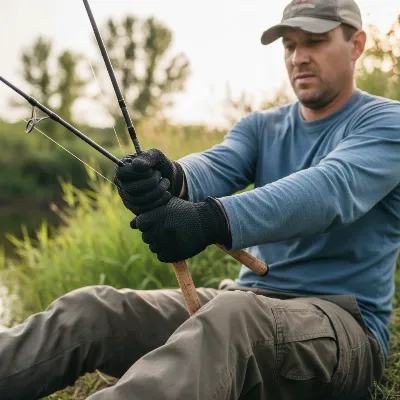 Angler demonstrating the “knees and grip” method to unstick a two-piece fishing rod safely
The Temperature Contrast Method
|
Our Picks for the Best Fishing Rod in 2026
As an Amazon Associate I earn from qualifying purchases.
|
||
| Num | Product | Action |
|---|---|---|
| 1 | PLUSINNO Fishing Rod and Reel Combos - Carbon Fiber Telescopic Fishing Pole - Spinning Reel 12 +1 Shielded Bearings Stainless Steel BB |

|
| 2 | Fishing Rod, 6.9ft 2Pcs Telescopic Fishing Rods Set, Carbon Fiber Fishing Pole, 2PCS Spinning Rod and Reel Combo with Carrier Bag Freshwater Fishing Rod and Reel Combos Kits Fishing Gear |
|
| 3 | Shakespeare Micro Spinning Rod |
|
| 4 | PLUSINNO Fishing Rod and Reel Combos - Carbon Fiber Telescopic Fishing Pole - Spinning Reel 12 +1 Shielded Bearings Stainless Steel BB |
|
| 5 | OKUMATrout Rod |
|
| 6 | PLUSINNO Fishing Rod and Reel Combos Carbon Fiber Telescopic Fishing Pole with Reel Combo Sea Saltwater Freshwater Kit Fishing Rod Kit |
|
| 7 | PLUSINNO Fishing Rod and Reel Combos Carbon Fiber Telescopic Fishing Pole with Reel Combo Sea Saltwater Freshwater Kit Fishing Rod Kit |
|
| 8 | PLUSINNO Fishing Rod and Reel Combos Carbon Fiber Telescopic Fishing Pole with Reel Combo Sea Saltwater Freshwater Kit Fishing Rod Kit |
|
| 9 | Sougayilang Fishing Rod Reel Combo with Telescopic Fishing Pole Spinning Reel Carrier Bag for Travel Saltwater Freshwater Fishing |
|
| 10 | PLUSINNO Fishing Gear,Full Fishing kit Include Fishing Rod and Reel Combo, Tackle Box with Fishing Lures, Fishing Accessories, Fishing Pliers,Fishing Gifts for Men with Fishing Tool Kit |
|
This method takes advantage of the natural expansion and contraction of materials when exposed to different temperatures. It’s particularly useful when debris or a tight vacuum seal is the cause of the jam.
- Applying Cold: The male ferrule (the thinner section that slides into the female end) is typically made of a slightly different material or thickness than the female ferrule. Applying cold to the male ferrule will cause it to contract. You can achieve this by wrapping an ice pack or a bag of crushed ice directly around the male ferrule for about 15 to 20 minutes. Ensure the ice primarily covers the male section to maximize the shrinking effect. After cooling, try the “knees and grip” method again. The slight reduction in the male ferrule’s diameter can be just enough to break the seal.
- Applying Heat: Conversely, applying mild heat to the female ferrule can cause it to expand slightly, loosening its grip on the male section. You can run warm (not hot) tap water over the female ferrule for a minute or two, or use a hair dryer on a low setting, moving it constantly to prevent overheating any single spot. Caution is paramount here: excessive heat can damage the rod’s resin or warp the blank, so always err on the side of caution with temperature and never use open flames or boiling water. After warming, immediately attempt to separate the sections using a firm, straight pull.
The Two-Person Pull Method
When a rod is exceptionally stubborn, a second pair of hands can provide the necessary force. This method requires clear communication and synchronized effort to prevent damage.
Stand facing your partner, each gripping one section of the rod firmly with a towel or rubber gloves. Position yourselves so the rod is horizontal between you. On a count, both of you should pull straight back, away from each other, without twisting. The goal is a steady, even pull, not a sudden jerk. If one person pulls harder or twists, it can put uneven stress on the rod and potentially lead to a break. This method is effective because it distributes the pulling force evenly across the joint.
The Gentle Twist and Pull
Sometimes, the simplest approach is the most effective. If your rod sections are not severely stuck, a gentle twisting motion while pulling can work wonders.
When disassembling your rod, instead of just pulling, hold each section firmly and apply a slight, controlled twisting motion as you pull them apart. Imagine you’re unscrewing something with a very fine thread. This can help break any minor friction or vacuum seal. When assembling, do the reverse: slowly twist the sections together until they are snug, then align the guides. This twisting motion prevents the vacuum effect and ensures the ferrules seat correctly, making future disassembly easier. This is also why many experts advise against lubricating the ferrule when assembling, as it can cause the rod to come apart too easily during casting, which is a significant safety hazard.
What NOT to Do When Your Rod Is Stuck
Knowing what to avoid is just as crucial as knowing what to do. Misguided attempts can quickly turn a minor inconvenience into permanent damage.
Firstly, never use brute force or jerky movements. This is the leading cause of broken rod tips and fractured ferrules. Rod blanks are designed to bend and absorb shock, but not to withstand sudden, unyielding pulls in a single direction. Secondly, avoid twisting excessively or forcefully. While a gentle twist can help, aggressive twisting can bind the sections tighter or even delaminate the rod material. Thirdly, and perhaps most importantly, do not use chemical lubricants like WD-40 or penetrating oils on the rod joint. While these might seem like a quick fix, they can potentially degrade the rod’s resin or finish over time, weakening the material. Moreover, if a lubricant gets into the ferrule, it can make it impossible for the rod sections to hold together securely during use, leading to casting mishaps or even losing a fish. As an expert from Winding Waters River Expeditions states, “WD-40 is supposed to work like magic for stuck rods. Didn’t do the trick for me.”
Preventing Future Rod Jams
The best way to deal with a stuck rod is to prevent it from happening in the first place. A few simple maintenance and handling habits can save you a lot of frustration.
- Regular Cleaning and Maintenance: After every fishing trip, especially in saltwater environments, disassemble your rod and thoroughly wipe down the ferrules with fresh water and a clean cloth. Use a Q-tip to clean the inside of the female ferrule, gently twirling it to remove any accumulated dirt, sand, or salt. Ensure both ends are completely dry before reassembling or storing.
- Proper Assembly and Disassembly Techniques: When putting your rod together, always use a gentle, twisting motion as you push the sections together until they are snug, then align your guides. Avoid pushing straight in with force, which can create a vacuum. For disassembly, reverse the process: apply a gentle twist while pulling straight apart.
- Correct Storage Practices: Store your two-piece rods disassembled in a rod case or a dedicated rod rack. Avoid leaving them assembled for extended periods, as this can allow debris to settle in the joint or the materials to bind due to ambient temperature changes. Proper storage also protects your rod from accidental bends or impacts that could lead to jams.
Top Fishing Rods (Example)
While this article focuses on unsticking a rod, choosing the right equipment also plays a role in overall rod longevity and ease of maintenance. For instance, high-quality rods often feature precisely machined ferrules that are less prone to sticking. Brands like Shimano, Fenwick, and St. Croix are known for their craftsmanship and durable components. For budget-conscious anglers, options from Ugly Stik or Penn offer robust performance. Always consider the material (graphite for sensitivity, fiberglass for durability), power, and action that best suits your fishing style and target species.
> “Proper rod maintenance and storage ensure more time catching fish and less time wrestling jammed gear.” – Winding Waters River Expeditions, Fly Fishing Experts
Conclusion
A stuck two-piece fishing rod is a common nuisance that every angler encounters sooner or later. While it can be tempting to resort to brute force, patience and the correct techniques are your best allies in safely resolving the issue. By understanding why rods get stuck and employing methods like the “knees and grip,” temperature contrast, or the two-person pull, you can confidently separate your rod sections without causing damage. More importantly, adopting preventive measures such as regular cleaning, proper assembly, and careful storage will dramatically reduce the likelihood of encountering a stubborn rod in the future, ensuring your gear is always ready for your next cast. So, which of these methods will you try first to get your rod back in action?

The temperature contrast tip is something I hadn’t really considered before, but it makes a lot of sense. I usually just try to muscle it, which I know isn’t the best for the rod blank. I’ll definitely be trying the ice pack trick next time my surf rod decides to play hard to get. Good to know there are safer ways to deal with those stubborn ferrules.
This is exactly what I needed! I always thought dirt and sand were the main issues, but understanding how salt crystals can bind the pieces together in the ferrule is a game changer. I’m much more diligent about rinsing my rods now, especially after ocean fishing. Prevention is key, but these methods are great for when it inevitably happens.
I tried the two-person pull method with my husband on my baitcaster rod, and while it eventually worked, it felt a little risky. We were really careful, but I was still worried about damaging the rod. It did get the job done, but I think I prefer the less aggressive methods for future jams. Maybe it’s just my technique, but it felt like a lot of force.
I’ve had my share of stuck rod sections, especially after a long day on the saltwater flats. The ‘knees and grip’ method mentioned here is a lifesaver. It really gives you that extra leverage without feeling like you’re going to snap your rod. My old spinning rod was completely jammed last week, and this technique got it apart in less than a minute. Highly recommend trying it before you panic!