A loose fishing rod reel seat can be fixed by re-tightening the locking nut, shimming the reel foot with electrical tape, applying plumber’s tape to the threads, injecting two-part epoxy for a permanent bond, or considering component replacement. This common issue can severely impact casting accuracy and sensitivity, but many solutions are straightforward and can be performed by anglers themselves, restoring the rod’s reliability.
Understanding Your Fishing Rod’s Reel Seat
Before diving into fixes, it’s helpful to understand what a reel seat is and how it works. The reel seat is the component on your fishing rod designed to securely hold your fishing reel in place. It ensures that the reel remains aligned with the rod’s guides and handle, providing a stable platform for casting and retrieving.
A typical reel seat consists of several key parts: the body or barrel, which is the main tubular structure; a fixed hood at one end; a movable hood (often integrated into a locking nut or collar) that slides along barrel threads to secure the reel foot; and sometimes a trigger for casting rods to enhance grip and control. The reel’s foot slides into the hoods, and the locking nut is tightened to clamp it firmly against the rod. When any part of this system fails or isn’t properly engaged, you experience that unwelcome looseness.
Common Reasons Your Reel Seat Loses Its Grip
A loose reel seat can stem from various issues, some simple, others requiring more attention. Understanding the root cause is the first step toward an effective solution.
The most frequent culprit is often improper tightening. Many anglers simply don’t tighten the locking nut sufficiently, especially during the heat of the moment or after a long day on the water. Another common cause is wear and tear. Over time, the threads on the reel seat can wear down, or the materials themselves can degrade, making it harder to achieve a firm lock.
Sometimes, the issue can be traced back to manufacturing flaws. A poorly constructed or inadequately glued reel seat, or one with ill-fitting components, might be loose from the factory. Incompatible sizing between your reel’s foot and the rod’s reel seat can also cause wobbling, even when the nut is fully tightened. If the reel foot is slightly too small for the seat, there will always be play. Finally, more severe component damage, such as a cracked hood, stripped locking nut threads, or the entire reel seat detaching from the rod blank, can also lead to significant looseness, often requiring more intensive repair.
5 Quick Fixes for a Loose Fishing Rod Reel Seat
Dealing with a loose reel seat can be annoying, but many common issues have straightforward solutions. Here are five practical fixes, ranging from simple adjustments to more permanent repairs, to help you restore your rod’s stability.
1. Re-tighten the Locking Nut Properly
|
Our Picks for the Best Fishing Rod in 2026
As an Amazon Associate I earn from qualifying purchases.
|
||
| Num | Product | Action |
|---|---|---|
| 1 | Shakespeare Micro Spinning Rod |

|
| 2 | PLUSINNO Fishing Rod and Reel Combos Carbon Fiber Telescopic Fishing Pole with Reel Combo Sea Saltwater Freshwater Kit Fishing Rod Kit |
|
| 3 | PLUSINNO Fishing Rod and Reel Combos - Carbon Fiber Telescopic Fishing Pole - Spinning Reel 12 +1 Shielded Bearings Stainless Steel BB |
|
| 4 | Fishing Rod, 6.9ft 2Pcs Telescopic Fishing Rods Set, Carbon Fiber Fishing Pole, 2PCS Spinning Rod and Reel Combo with Carrier Bag Freshwater Fishing Rod and Reel Combos Kits Fishing Gear |
|
| 5 | PLUSINNO Fishing Rod and Reel Combos - Carbon Fiber Telescopic Fishing Pole - Spinning Reel 12 +1 Shielded Bearings Stainless Steel BB |
|
| 6 | OKUMATrout Rod |
|
| 7 | Sougayilang Fishing Rod Reel Combo with Telescopic Fishing Pole Spinning Reel Carrier Bag for Travel Saltwater Freshwater Fishing |
|
| 8 | PLUSINNO Fishing Gear,Full Fishing kit Include Fishing Rod and Reel Combo, Tackle Box with Fishing Lures, Fishing Accessories, Fishing Pliers,Fishing Gifts for Men with Fishing Tool Kit |
|
| 9 | PLUSINNO Fishing Rod and Reel Combos Carbon Fiber Telescopic Fishing Pole with Reel Combo Sea Saltwater Freshwater Kit Fishing Rod Kit |
|
| 10 | PLUSINNO Fishing Rod and Reel Combos Carbon Fiber Telescopic Fishing Pole with Reel Combo Sea Saltwater Freshwater Kit Fishing Rod Kit |
|
This might seem obvious, but it’s often overlooked. Begin by completely removing your reel from the seat. Inspect the threads on both the reel seat and the locking nut for any debris, sand, or damage. Clean them thoroughly. Then, re-seat your reel, ensuring its foot is fully engaged in both the fixed and movable hoods. Tighten the locking nut firmly by hand. For stubborn nuts or metal reel seats, a strap wrench can provide extra leverage without damaging the rod, but be cautious not to overtighten, especially on composite seats. Make sure the reel is aligned with the rod’s guides before applying final torque.
2. Shim the Reel Foot with Tape
If your reel still wobbles even after tightening, the reel foot might be slightly too small for the reel seat. This is a common issue with some reel and rod combinations. A simple and effective temporary fix is to use a shim. Electrical tape is ideal for this. Remove your reel and apply a few tight wraps of electrical tape around the ends of the reel foot to bulk it up slightly. You can also fold a small piece of tape and stick it under the reel foot. Another option is a thin strip of plastic or even a piece of heat shrink tubing applied to the reel foot. This creates a tighter fit, allowing the reel seat to clamp down more securely.
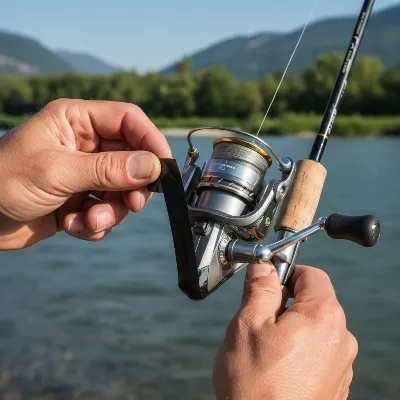 Angler’s hands wrapping electrical tape around a fishing reel foot to fix a loose reel seat on a rod
3. Apply Thread Lock or Plumber’s Tape to Threads
Sometimes, the locking nut itself loosens over time, particularly with heavy use or strong vibrations. To prevent the nut from backing off, you can apply plumber’s tape (PTFE tape) to the reel seat threads. Remove the reel and wrap a few tight turns of plumber’s tape around the threads in the direction the nut turns when tightening. This will create friction, helping to lock the nut in place. Another, more semi-permanent solution for persistent loosening is a non-permanent, low-strength thread locker. Apply a tiny drop to the threads (avoiding contact with the rod blank), tighten the nut, and allow it to cure. This will prevent accidental loosening but still allow you to remove the reel when needed.
4. Inject Epoxy for a Permanent Bond
If the entire reel seat is spinning or moving on the rod blank itself, rather than just the reel wobbling within the seat, it indicates that the reel seat’s bond to the blank has failed. This requires a more permanent fix using epoxy. You’ll need a two-part epoxy glue (such as ProGlü), a syringe, a small drill bit, and denatured alcohol.
Start by removing the reel and marking four equally spaced spots on the reel seat under where the reel foot usually mounts (to conceal the repair). Carefully drill a small hole through the reel seat at each mark, being mindful not to drill into the rod blank itself. Mix your two-part epoxy and use the syringe to inject the glue into each hole until the cavity under the seat is full. Rotate the reel seat 360 degrees to ensure even epoxy distribution and proper alignment with the rod guides. Wipe off any excess epoxy with denatured alcohol immediately. Allow it to cure completely, typically for 24 hours, before using your rod.
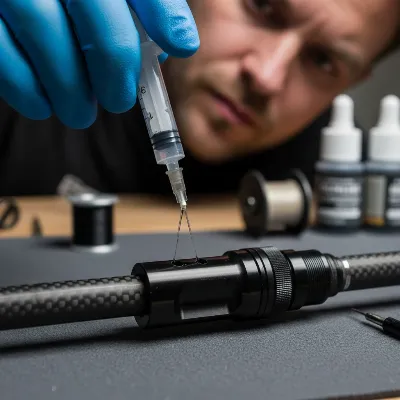 Hand injecting two-part epoxy into a fishing rod reel seat to permanently fix a loose bond on a rod blank
5. Consider Component Replacement or Professional Repair
If the reel seat components themselves are damaged—such as a stripped locking nut, a cracked hood, or severe thread damage that shims or tape cannot overcome—it might be time for component replacement. Many fishing tackle suppliers offer replacement reel seat parts. Replacing these components can involve specialized tools and knowledge, especially if the entire reel seat needs to be removed and re-installed.
For serious damage or if you’re uncomfortable performing epoxy injections or component replacements, taking your rod to a professional rod building or repair shop is often the best course of action. They have the expertise and specialized tools to diagnose and fix complex reel seat issues, ensuring your rod is returned to optimal condition without risk of further damage. While this might incur a cost, it can extend the life of a valuable rod significantly.
Keeping Your Reel Seat Secure: Prevention Tips
Prevention is always better than cure, especially when it comes to fishing gear. A few simple habits can significantly reduce the chances of your fishing rod reel seat coming loose.
Always check your reel seat before each fishing trip. A quick twist of the locking nut and a gentle wiggle of the reel can quickly identify any burgeoning issues before they become major problems. When mounting your reel, ensure the foot is seated correctly and tighten the locking nut firmly by hand. Avoid over-tightening with tools unless necessary for metal seats, as this can strip threads or crack composite materials.
Additionally, store your fishing rods properly. Avoid leaving reels mounted in seats for extended periods if the rod is subject to temperature fluctuations or impacts. When not in use, consider loosening the reel seat slightly to relieve pressure, or even removing the reel entirely, especially for transport. Choosing a quality rod with well-made reel seat components and ensuring your reel’s foot is a good fit for the seat can also minimize future issues.
Conclusion
A loose fishing rod reel seat can be a source of constant frustration, but it’s a problem that most anglers can tackle with the right approach. From simply re-tightening a loose nut to employing tape shims for a snugger fit, or even undertaking a more involved epoxy injection, there are effective solutions to get your rod back in prime condition. Knowing when to apply a quick DIY fix and when to seek professional help ensures you maintain your gear’s integrity and performance. By taking a few preventative measures and addressing issues promptly, you’ll ensure your reel stays securely in place, allowing you to focus on the thrill of the catch rather than the wobble of your gear. So, next time you hit the water, your reel seat will be tight, and your mind will be free to enjoy the fishing experience.
Frequently Asked Questions
Frequently Asked Questions
Why does my reel wobble even when the locking nut is fully tightened?
If your reel still wobbles after tightening the nut completely, it's likely due to the reel foot being slightly too small for the reel seat's internal dimensions. This creates a small gap that even maximum tightening cannot fully close. Shimming the reel foot with electrical tape or a thin piece of plastic is a common and effective solution for this specific issue.
Can I use super glue to fix a loose reel seat?
No, it's generally not recommended to use super glue for a loose reel seat. Super glue (cyanoacrylate) can be brittle and may not hold up to the stresses of fishing. If the reel seat is loose from the blank, a two-part epoxy designed for rod building is the appropriate adhesive, offering a strong, flexible, and durable bond that can withstand environmental factors and fishing forces.
How often should I check my reel seat for looseness?
It's a good practice to check your reel seat for looseness every time you set up your rod for fishing. A quick visual inspection and a gentle wiggle of the reel can identify any issues. Regular checks, especially before a long day of fishing or when targeting larger species, can prevent mid-trip frustrations and potential gear damage.
What tools do I need for these reel seat fixes?
For basic fixes, you might only need electrical tape, plumber's tape, or a strap wrench for extra leverage. For more permanent repairs involving epoxy, you'll need two-part epoxy glue (like ProGlu00fc), a syringe, a small drill bit (matching the syringe tip), denatured alcohol for cleanup, and mixing cups/sticks.
What are the common causes of a loose reel seat?
A loose reel seat can be caused by improper tightening, wear and tear on threads, manufacturing flaws, incompatible sizing between the reel foot and seat, or component damage like a cracked hood. Understanding the root cause helps in choosing the most effective solution for your fishing rod.
Fix a Loose Fishing Rod Reel Seat
Follow these steps to fix a wobbly or loose fishing rod reel seat and restore your rod's stability for better casting and retrieval.
Remove your reel and inspect the threads on both the reel seat and locking nut for debris. Clean them thoroughly. Re-seat your reel, ensuring its foot is fully engaged, then tighten the locking nut firmly by hand. A strap wrench can provide extra leverage for metal seats, but avoid overtightening composite seats.
If the reel still wobbles after tightening, the reel foot might be too small. Remove your reel and apply a few tight wraps of electrical tape around the ends of the reel foot to bulk it up. This creates a tighter fit, allowing the reel seat to clamp down more securely.
To prevent the locking nut from loosening over time, remove the reel and wrap a few tight turns of plumber's tape (PTFE tape) around the reel seat threads. For a more semi-permanent solution, apply a tiny drop of non-permanent, low-strength thread locker to the threads, tighten the nut, and allow it to cure.
If the entire reel seat is spinning on the rod blank, use a two-part epoxy. Drill four small, equally spaced holes through the reel seat (under where the reel foot mounts). Inject mixed epoxy into each hole with a syringe, rotate the reel seat for even distribution, wipe excess, and allow 24 hours to cure.
For damaged components like a stripped locking nut or cracked hood, consider replacing the parts. If the damage is severe or you're uncomfortable with DIY repairs, take your rod to a professional rod building or repair shop. They have specialized tools and expertise to ensure optimal repair.

I tried the re-tightening method on my surf rod, but the locking nut just keeps backing off after a few casts. It helps for a bit, but I was hoping for something more lasting without having to constantly adjust it. Maybe I need to look into the epoxy option next, but I’m a bit hesitant to go that permanent.
My spinning rod’s reel seat started getting loose after a lot of use, and it was really messing with my casting accuracy. I tried the plumber’s tape on the threads, and it definitely helped tighten things up. It’s not a super permanent solution, but for a quick fix before a trip, it worked wonders. I’m glad I didn’t have to buy a whole new rod.
I’ve had a few rods where the reel seat just wouldn’t stay put, especially on my older bass rod. The tip about using electrical tape to shim the reel foot was a game-changer. It’s such a simple fix but it made a huge difference in how secure my reel feels now. No more wobbling during a retrieve!
The two-part epoxy suggestion for a permanent bond was exactly what I needed for my favorite fly rod. I was tired of my reel shifting around, especially when fighting a bigger fish. It was a bit nerve-wracking to apply, but the instructions were clear, and now my reel seat is rock solid. Feels like a new rod!